


Views: 0 Author: Site Editor Publish Time: 2026-11-20 Origin: Site


Why do custom dinnerware projects fail? Usually, it is not the design that falls short, but the underlying technical specs. Commercial buyers often find themselves caught between a vision for high-end aesthetics and the operational reality of kitchen durability. A stunning plate serves little purpose if it chips after the first cycle in an industrial dishwasher. Precise technical documentation is your only defense against costly production errors.
Ceramic tableware is a complex class of clay-based goods hardened by extreme kiln temperatures. Whether you are building a proprietary silhouette from scratch or opting for a refined aesthetic like custom soft pink gradient speckled tableware, success depends on understanding how chemistry meets engineering. This guide breaks down the essential standards and procurement steps needed to master the custom ceramic supply chain.
Key Takeaways
Material Foundations: Distinguishing between porcelain, stoneware, and bone china defines your piece's weight, heat retention, and price point.
Geometric Accuracy: B2B sizing must prioritize stackability and kitchen ergonomics, requiring strict 3D CAD modeling to account for kiln shrinkage.
Surface Longevity: Firing techniques determine resistance to cutlery scratching; in-glaze methods are the gold standard for high-traffic environments.
Regulatory Compliance: Third-party testing for FDA and LFGB standards is a non-negotiable safety barrier.
Supply Chain Logic: Understanding lead times and MOQs prevents inventory shortages and keeps your operations running smoothly.
The core of your dinnerware determines its lifespan. Before settling on a color, identify the clay body best suited for your specific service environment.
Stoneware, porcelain, and bone china offer different mechanical benefits. Choosing the right one balances your budget against the intensity of your kitchen.
Material | Firing Temp | Best Use Case | Key Benefit |
|---|---|---|---|
Stoneware | 1,100°C - 1,200°C | Casual, Farm-to-Table | High impact resistance |
Porcelain | >1,300°C | Fine Dining | Fully vitrified, non-porous |
Bone China | ~1,200°C | Luxury Hospitality | High strength, lightweight |
For commercial kitchens, water absorption is a critical technical metric. Industry leaders mandate an absorption rate of less than 0.5%. If the ceramic body is too porous, moisture can infiltrate the foot of the plate during dishwashing. When this ceramic later enters a microwave, the trapped steam causes internal structural fractures and provides a breeding ground for bacteria. When sourcing, always request documentation verifying a low water absorption rate to ensure food safety and structural integrity.
In the hospitality sector, plates are not just decorative; they are tools of efficiency. Standardized sizing is the backbone of a high-functioning kitchen, allowing for consistent portion control and optimized rack storage.
Bread plates typically stick to a 6-inch diameter, while main course dinner plates demand a 10.5 to 12-inch footprint. When designing custom pieces, the inner well must be calculated carefully. You need enough surface area to showcase the chef's presentation while leaving a rim wide enough for staff to handle the dish safely without touching the food. If you are developing specially custom soft pink gradient speckled tableware, ensure your volume capacity for bowls is specified in fluid ounces to match your serving portions.
Custom shapes require bespoke molds. Keep in mind that raw clay typically shrinks by 10% to 15% when fired. Advanced factories use 3D CAD software to compensate for this movement. Always insist on seeing an unglazed, 3D-printed prototype before committing to steel or plaster production molds. This small investment in the sampling stage prevents expensive re-tooling later in the project.
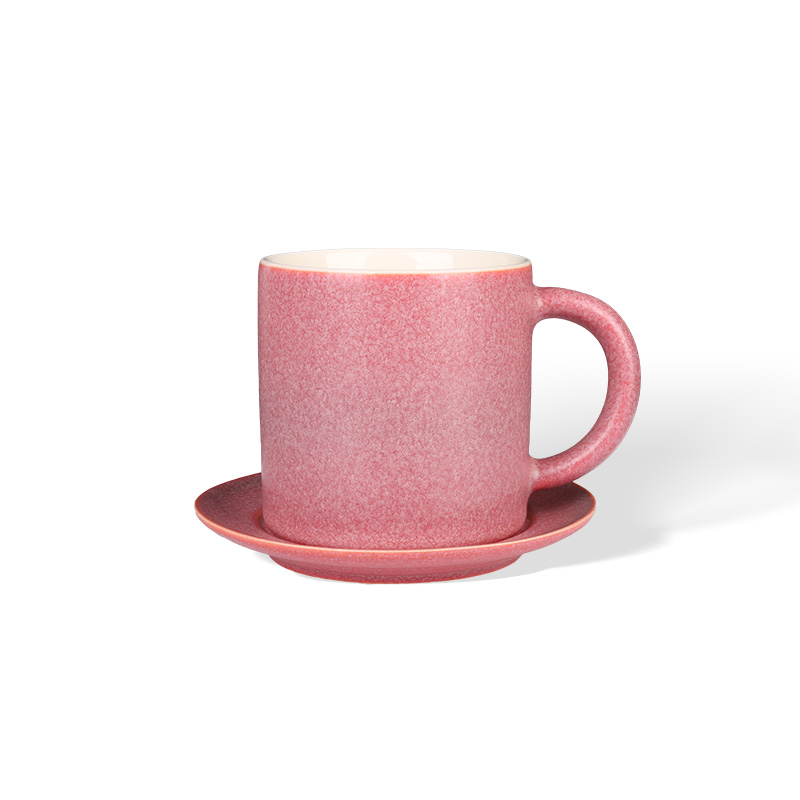
The glaze is the only barrier between your food and the porous ceramic body. It also determines how your brand looks after six months of daily use.
For high-volume restaurants, in-glaze decoration is the superior choice. The process involves applying pigments over a pre-fired glaze and subjecting the piece to a second high-temperature firing. The colors effectively melt into the glaze layer, creating a permanent, scratch-resistant surface. In contrast, on-glaze finishes are applied at lower temperatures. While they allow for more vibrant colors, they are prone to scratching from knives and fading over time.
Modern dining is shifting toward tactile experiences. Consumers are increasingly drawn to artisanal, sensory-rich designs. This has led to a rise in demand for speckled tableware, which utilizes reactive minerals in the glaze to create unique, organic variations. While these reactive finishes offer an "Instagrammable" look, they require a highly controlled manufacturing process to remain uniform across a production run. As a buyer, your focus should be on consistent speckle density to ensure every plate feels like part of a cohesive set.
Achieving a specific brand color in ceramics is a chemical challenge rather than a digital one. Because we are working with metal oxides that shift color based on kiln temperature, you cannot simply rely on a Pantone reference found in print design.
Technicians must formulate custom oxide blends and run test fires to achieve your target hue. When you order a complete custom soft pink gradient speckled tableware series, digital proofs are insufficient. You must approve a physical Pre-Production Sample. This sample will reveal how the gradient behaves on the specific curvature of your dish and ensure that the reactive elements remain within your aesthetic tolerance.
The hospitality industry is unforgiving. To protect your investment, your products must pass rigorous laboratory testing.
Lead and cadmium are strictly prohibited in modern commercial glazes. Ensure your contract includes a requirement for lead-free, cadmium-free production. Furthermore, mandate testing for thermal shock. A commercial plate should survive a transition from a sub-zero freezer to a hot oven without cracking. Additionally, ask for proof that the glaze withstands the harsh alkaline detergents used in high-temperature industrial dishwashers.
Your packaging should match your distribution strategy. If you are shipping to e-commerce customers, use ISTA 1A drop-test certified mailers with foam inserts. If you are ordering a Gift custom soft pink gradient speckled tableware set, the unboxing experience matters; consider molded pulp or rigid gift boxes that protect the items while reflecting your brand's premium value.
Custom ceramics typically move from inquiry to delivery in 60 to 90 days. Being prepared at the RFQ stage saves weeks of back-and-forth communication.
Factories enforce Minimum Order Quantities to balance the overhead costs of kiln preparation. While standard logos might only require 300 pieces, a fully custom shape often requires 1,000 units. A typical workflow involves one to two weeks for design, two weeks for sampling, forty-five days for full-scale production, and several weeks for freight. Plan your sourcing strategy with these milestones in mind to ensure your inventory is ready for your launch.
Do not rely on marketing brochures alone. Ask for recent third-party test reports from recognized laboratories. Evaluate whether the factory is ISO 9001 certified and check their history of serving hospitality clients. A partner that understands the nuances of HoReCa (Hotel, Restaurant, and Café) will anticipate your needs for edge-chip resistance and consistent glazing long before you encounter an issue.
Conclusion
Successful custom tableware procurement is a balance of aesthetic vision and engineering discipline. By prioritizing technical specifications like water absorption rates, in-glaze decoration, and rigorous safety compliance, you minimize risk and maximize the longevity of your brand's dining experience. Start your project by identifying your material requirements and selecting a partner capable of handling the complexities of high-fire ceramic production.
Mold costs usually range from $100 to $500 depending on the shape's complexity. These fees cover the 3D modeling and physical mold casting. In most B2B scenarios, these costs are amortized or refunded once you hit a pre-agreed volume, making it a low-risk investment for large-scale operations.
Reactive glazes are intentionally variable. While you can control the base color and the general density of the speckles, slight variations are part of the process's beauty. To manage expectations, use a pre-production sample to define the acceptable range of variation before mass manufacturing begins.
On-glaze decoration sits on the surface, making it susceptible to abrasion from cutlery and chemical erosion from cleaners. In-glaze decoration bonds with the glass layer during the final firing, providing a smooth, permanent shield that protects your design from the rigors of a commercial kitchen.
Include your target material (e.g., porcelain), required physical dimensions, weight tolerances, intended volume, and any specific safety certifications required for your market (FDA/LFGB). The more precise you are at the start, the faster you will receive an accurate quote and production timeline.


