


Views: 0 Author: Site Editor Publish Time: 2026-09-30 Origin: Site


Did you know a mug serves as your brand's very first physical touchpoint? Long before a customer tastes the nuanced acidity of a single-origin espresso, their hands wrap around the vessel holding it. They feel its weight. They register its texture. Unconsciously, they form an immediate, lasting opinion about your establishment's overall quality.
Unfortunately, many cafe owners treat drinkware procurement as an afterthought. They opt for flimsy retail cups that look fantastic on a boutique shelf but fail miserably in a high-volume environment. What happens next? Skyrocketing replacement costs due to constant chipping. Poor heat retention completely ruins the carefully crafted beverage profile. Eventually, a jarring mismatch with the brand's aesthetic emerges. Choosing properly is a strategic business decision. We will delve into the exact engineering criteria and operational metrics you need to evaluate. This ensures your investment enhances both customer satisfaction and bottom-line profitability.
Durability is Non-Negotiable: Commercial environments require high-fired vitrified materials to prevent chipping and cracking during heavy daily use.
Heat Retention Matters: Structural thickness and base weight directly dictate how long the beverage stays at the optimal serving temperature.
Menu Compatibility: Proper sizing guarantees consistency in espresso-to-milk ratios. This is critical for maintaining specialty coffee standards.
Ergonomics and Operations: Functional design must gracefully accommodate the customer’s grip comfort and the barista’s urgent need for rapid stacking and washing.
Recent market analyses indicate a massive shift in consumer expectations. Today's cafe patrons demand more than just exceptional coffee. They seek a cohesive, multi-sensory experience. Industry data shows that visually striking, tactile drinkware significantly boosts user-generated content on social media platforms. We are seeing a distinct move away from traditional round diner cups. Instead, modern operators are gravitating toward minimalist, structured designs. These contemporary shapes not only elevate the perceived value of the beverage but also offer superior grip ergonomics. Aligning your procurement strategy with these aesthetic trends is no longer optional. It is a proven method to differentiate your brand in a highly saturated market.
Confusing consumer-grade drinkware with commercial-grade equipment is a remarkably costly operational error. Retail cups found in home goods stores are manufactured for gentle morning use. In stark contrast, a bustling cafe environment subjects drinkware to immense mechanical stress. Cups collide mercilessly in bus tubs. They face rapid temperature shifts. They survive high-pressure commercial dishwashers dozens of times daily. Consequently, when sourcing commercial Restaurant Mugs, buyers must prioritize structural integrity over superficial charm.
The foundation of true commercial durability lies deep within the vitrification process. Think of it as forging steel. Vitrification occurs when specialized clay is fired at extreme temperatures. High-end commercial pieces are typically fired around 1,280 degrees Celsius. During this intense heating phase, the silica melts. It transitions into a glass-like state, completely filling microscopic internal voids.
The result is a highly dense, non-porous structure. Fully vitrified ceramics boast a water absorption rate of less than 0.5 percent. This non-porous nature is vital. It prevents the vessel from absorbing stale coffee oils or bacteria, remaining perfectly sanitary over years of service. Furthermore, the absence of internal moisture stops the material from violently expanding during temperature shifts. This drastically reduces the risk of internal micro-fractures and catastrophic shattering.
Observe a busy espresso bar during the morning rush. The most common point of failure is always the rim. Baristas work at a frantic pace. Collisions with metal espresso spouts and stainless-steel sinks are inevitable. To combat this daily abuse, purpose-built commercial mugs feature reinforced, rolled edges.
A rolled edge intentionally increases the physical thickness of the rim. It creates a rounded bumper. This design efficiently distributes the kinetic energy of an impact across a wider surface area. Instead of a sharp edge taking the concentrated force, the reinforced rim absorbs the shock safely. Identifying this specific design feature indicates you are dealing with a manufacturer who truly understands hospitality engineering.
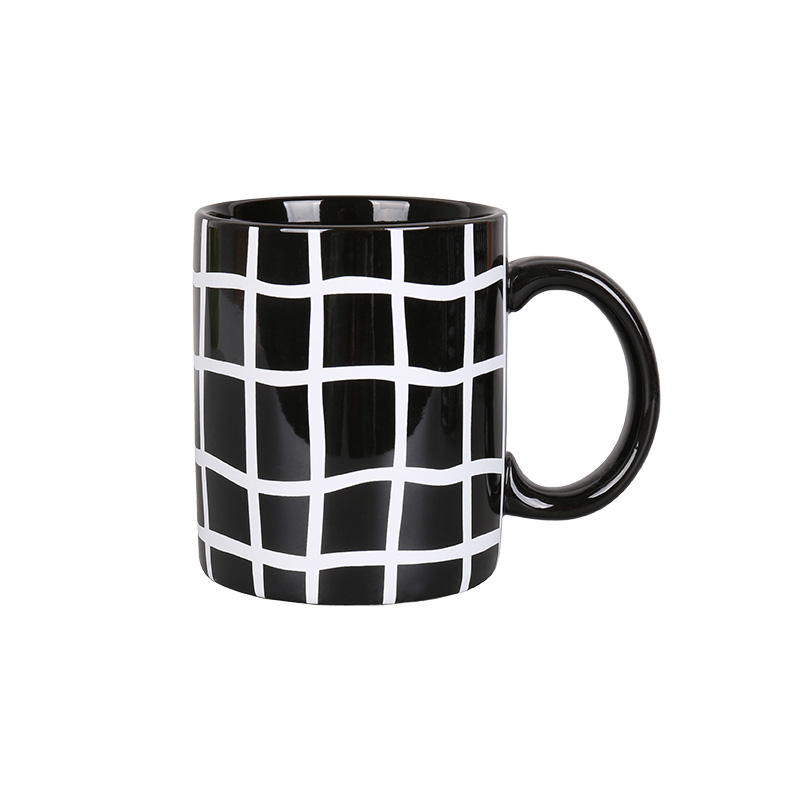
The modern specialty coffee industry relies on precise temperature control. A perfectly extracted Ethiopian espresso loses its complex flavor profile rapidly if the serving vessel drains its heat. Evaluating thermal dynamics is just as crucial as testing physical strength.
Ceramic is naturally a poor conductor of heat. Ironically, this makes it an excellent insulator. However, the degree of insulation depends entirely on the mass and thickness of the specific material. Thin-walled porcelain allows precious heat to escape quickly into the ambient air.
For optimal heat retention, operators should hunt for a specific structural profile. Look for a thick wall that tapers slightly toward the lip, combined with a heavy, weighted base. The thick walls act as a robust thermal barrier. Simultaneously, the heavy base serves as a thermal mass. Once heated, it stores energy and slowly radiates it back into the beverage. This thoughtful engineering ensures a customer reading a novel can enjoy a pleasantly warm drink for up to 30 minutes.
To maximize insulating properties, seasoned baristas utilize the ambient heat of the espresso machine. They store cups upside down on the top warming tray. This practice is deeply rooted in thermodynamics. Pouring hot coffee into a room-temperature cup instantly plummets the beverage temperature by as much as 15 degrees Fahrenheit.
Pre-warming entirely prevents this initial thermal shock. Nevertheless, this workflow requires exceptionally high thermal shock resistance. Constant cycling between a hot tray, boiling water, and a cold rinsing sink causes inferior ceramics to develop crazing. High-fired commercial ceramics are chemically formulated to withstand these rapid fluctuations without degrading.
Consistency is the undisputed hallmark of a successful coffee program. Achieving this unwavering consistency requires strict adherence to specialty coffee ratios. The volumetric capacity of your Coffee Mugs directly dictates the flavor balance of your entire menu.
If a cup is too large, baristas will naturally over-pour milk to fill the vessel. This dilutes the espresso. Conversely, a cup that is too small results in an unbalanced, overly intense acidity. Procurement managers must source highly specific capacities.
Espresso: The classic 2 to 3 ounce demitasse must feature a narrow internal diameter and a thick, rounded base. This internal curvature allows the espresso to slide down gracefully, preserving the delicate crema.
Cortado and Macchiato: These punchy drinks require a precise ratio. A 4.5 ounce capacity physically prevents milk over-pouring.
Cappuccino: Traditional 5 to 6 ounce cappuccinos require a wide, bowl-like shape. The expansive surface area allows for intricate latte art and gives micro-foam ample room to expand.
Lattes and Drip Coffee: Larger 8 to 12 ounce volumes demand taller, cylindrical shapes to maintain heat. Crucially, these sizes require robust handle designs to support the increased liquid weight.
Offering a wildly diverse variety of cup sizes might seem aesthetically eclectic. Operational efficiency, however, strongly dictates otherwise. Standardize your inventory to just three or four carefully selected capacities.
Limiting stock keeping units dramatically streamlines the barista workflow. During a morning rush, staff cannot waste time guessing which cup corresponds to which drink. Standardization makes recipe training mathematical and objective. It drastically reduces human error and product waste.
A cup is fundamentally a functional tool. While aesthetic appeal draws the customer in, ergonomic design dictates consumption comfort and operational efficiency.
The handle is the primary point of physical interaction. A poorly designed handle turns a premium coffee experience into a finger-cramping ordeal. Evaluate finger clearance and the overall center of gravity carefully.
The gap between the handle and the body must comfortably accommodate the user's fingers. Sensitive knuckles should never rest against scalding hot ceramic walls. For smaller cups, a simple one-finger pinch grip is acceptable. For larger 12-ounce vessels, the handle must be elongated. It needs to allow a secure two-finger or three-finger grip, distributing weight evenly to prevent wrist strain.
Space behind an espresso bar is premium real estate. Baristas need immediate access to dozens of cups without stepping away from their station. Stackability is a non-negotiable procurement requirement.
Purpose-built commercial cups often feature a clever interlocking base or a stepped ridge. This allows the base of one cup to nest securely inside the rim of another. A secure stacking mechanism prevents precarious towers from toppling, maximizing vertical storage efficiency and drastically reducing breakage.
Commercial durability and thermal retention are invisible foundational requirements. The visual presentation, however, is what customers will ultimately photograph and remember. In the era of social media, the aesthetic appeal of your cups is a critical business asset. The design and texture should serve as a tangible extension of your interior space.
The specialty coffee industry has seen an exciting shift away from perfectly cylindrical drinkware. Modern cafes are increasingly gravitating toward structured, angular designs. Sourcing high-quality Geometric Ceramic Mugs immediately signals to the customer that they are sitting in an upscale establishment.
The appeal goes beyond visual differentiation. From an ergonomic standpoint, faceted sides provide a much more secure grip. They offer distinct resting points for the fingers. Furthermore, the interplay of cafe lighting on angular surfaces creates a striking visual contrast. It acts as an implicit watermark for your cafe in top-down latte art photos.
Choosing the right glaze involves balancing visual appeal with daily practicality. Generally, operators must choose between matte and glossy finishes. Each presents distinct engineering advantages.
Feature Metric | Glossy Glaze Finish | Matte Glaze Finish |
|---|---|---|
Visual Aesthetic | Classic, highly reflective, traditional European cafe style. | Modern, rustic, earthy, understated, and highly contemporary. |
Tactile Experience | Smooth, slick, and cool to the touch. | Textured, slightly porous feel, offering a warmer grip. |
Scratch Resistance | Highly resistant to metal spoon marks and stacking abrasions. | More susceptible to showing silver-grey marks from metal spoons over time. |
Stain Resistance | Non-porous surface repels coffee oils and lipstick effectively. | May require occasional deep soaking with professional espresso machine cleaner. |
Critically evaluate your menu. If you serve heavily stirred drinks like thick mochas, a glossy interior is highly recommended. It prevents visible scratching, even if you opt for a trendy matte exterior.
Understanding specifications is only the first half of the procurement journey. The final step is vetting reliable wholesale suppliers. Partnering with the wrong manufacturer leads to massive operational headaches, from inconsistent glaze colors to sudden stock shortages.
When dealing with commercial manufacturers, you will encounter minimum order quantities. For custom-branded cups, these are typically higher because the factory must set up specific decals for your logo. Balance the unit cost against your available storage space and cash flow.
Supply chain reliability is equally critical. Demand hard data regarding average lead times for initial orders and reorders. Establish a clear understanding of these timelines. Set accurate inventory reorder points so your baristas never have to serve dine-in customers in disposable paper cups.
Never commit to a bulk purchase based solely on polished digital mockups. The tactile nature of drinkware demands real-world evaluation. Reputable suppliers will always provide a physical sample.
Subject the sample to rigorous testing. Have your lead barista pour latte art to check the internal curvature. Ask staff with different hand sizes to test the handle clearance with boiling water. Track exactly how long the liquid retains its optimal serving temperature compared to your current setup.
Choosing the perfect ceramic mugs requires an informed balance of commercial durability, precise sizing, and brand-aligned style. Investing in commercial-grade, vitrified options protects your operating budget from the constant bleed of replacement costs. Meanwhile, selecting unique designs helps your brand stand out in a visually-driven market.
High-quality coffee drinkware is not just a vessel. It is a direct investment in customer satisfaction and brand loyalty. Ready to elevate your daily cafe operations? Explore premium, commercial-grade options and find the perfect match for your brand at Art-Word today. Leave a lasting impression on every customer who walks through your doors.
The undisputed industry standard is high-fired, vitrified ceramic or porcelain. Vitrification involves firing the ceramic at temperatures exceeding 1,280 degrees Celsius. This causes the material to become glass-like and entirely non-porous. This molecular density provides superior heat retention. It also ensures the mugs are highly resistant to chipping, cracking, and harsh chemical sanitizers.
Procurement managers should utilize a standard industry formula. Calculate 2 to 3 times your maximum seating capacity, then add a 20 percent buffer. For example, a 40-seat cafe needs a baseline of 80 to 120 mugs. The multiplier accounts for mugs in use, in the bus tub, and in the dishwasher. The buffer is strictly reserved for inevitable breakages and peak holiday rushes.
This is a common operational concern, but the answer depends entirely on the internal engineering. High-quality commercial geometric designs are angular on the outside but feature slightly rounded, sweeping corners on the inside. This internal curvature allows commercial dishwasher jets to easily flush out sticky coffee oils and milk residue.
Absolutely. Applying custom logos is a standard service. For commercial applications, specifically request high-temperature kiln-fired decals. During the kiln-firing process, the decal physically melts and fuses directly into the ceramic glaze. This creates a permanent finish that will not scratch off or fade over time.
If you experience a high rate of chipped rims, you are likely using consumer-grade retail mugs. Retail mugs feature thin, delicate rims designed for gentle home use. In contrast, commercial cups are engineered with reinforced, rolled edges. This structural reinforcement absorbs and dissipates the kinetic energy of minor impacts, drastically reducing breakage.
Matte glazes, due to their slightly textured surface, can occasionally trap coffee oils over time. To remove these stubborn stains safely, avoid highly abrasive scouring pads that can ruin the finish. Instead, soak the mugs in a solution of hot water and professional espresso machine cleaning powder for 30 minutes. The active oxygen will effortlessly lift the baked-on oils, restoring the mug to its original pristine condition without damaging the glaze.
Yes, the geometry of the vessel significantly impacts flavor perception. A wider rim allows the beverage to spread across the entire palate, highlighting complex acidic notes in lighter roasts. Conversely, a narrower rim concentrates the aroma and directs the liquid toward the center of the tongue, enhancing the perceived sweetness and body of traditional espresso blends. Furthermore, internal curvature dictates how the espresso crema is preserved during the pour, directly affecting the drink's mouthfeel.


