


Views: 0 Author: Site Editor Publish Time: 2026-09-07 Origin: Site


Lighting design in any interior space relies on two crucial elements. The candle provides the illumination, but the vessel supporting it dictates the safety, light dispersion, and overall aesthetic impact. Among the myriad materials available on the current market, kiln-fired ceramic has proven to be a superior choice. It offers unmatched thermal resistance and structural durability for discerning homeowners and commercial designers.
Despite the obvious engineering and aesthetic benefits of this earthen material, buyers frequently struggle to choose the right form factor. The most common dilemma is deciding between a low-profile tealight receptacle and a vertical taper holder. These two designs are not interchangeable. They accommodate fundamentally different wax structures. Consequently, they interact with physical space and daily maintenance in vastly different ways. This guide breaks down the objective physical differences, functional applications, and precise purchasing considerations, equipping you to select the exact Decorative Candle Holder that aligns with your spatial requirements.
Structural Engineering: Tealight holders feature a wide, low center of gravity to securely cradle a self-contained wax cup. Taper holders require a heavily weighted base and a narrow, deep socket to support tall candles against gravity.
Lumen Dispersion: Tealights generate a subtle, upward-facing glow perfect for intimate clustering. Taper candles elevate the flame, casting functional light outward over a much wider radius.
Thermal & Wax Management: Tealights are inherently low-maintenance because the wax remains contained. Taper holders demand specific structural lips or wide bases to catch falling wax and protect furniture surfaces.
Spatial Perception: Tealights draw the human eye horizontally across a tabletop. Tapers act as architectural columns, guiding the eye vertically to enhance the perceived height of a room.
Recent market analyses in the interior decor and hospitality sectors reveal a massive shift in consumer preferences. Mass-produced glass and synthetic plastics are rapidly losing ground. Instead, there is a pronounced surge in demand for tactile, earth-derived materials. This industry-wide pivot is driven by the growing adoption of biophilic design principles, which emphasize natural textures and sustainable manufacturing.
From an engineering standpoint, this shift makes perfect sense. Open flames generate localized high temperatures that easily cause inferior materials to warp, discolor, or shatter from thermal shock. High-density ceramics safely absorb and dissipate this heat. The glazing process further seals the clay, offering finishes ranging from a minimalist matte white to complex reactive glazes. This combination of robust thermal mass and visual weight ensures that premium ceramic pieces function as standalone art even when unlit.
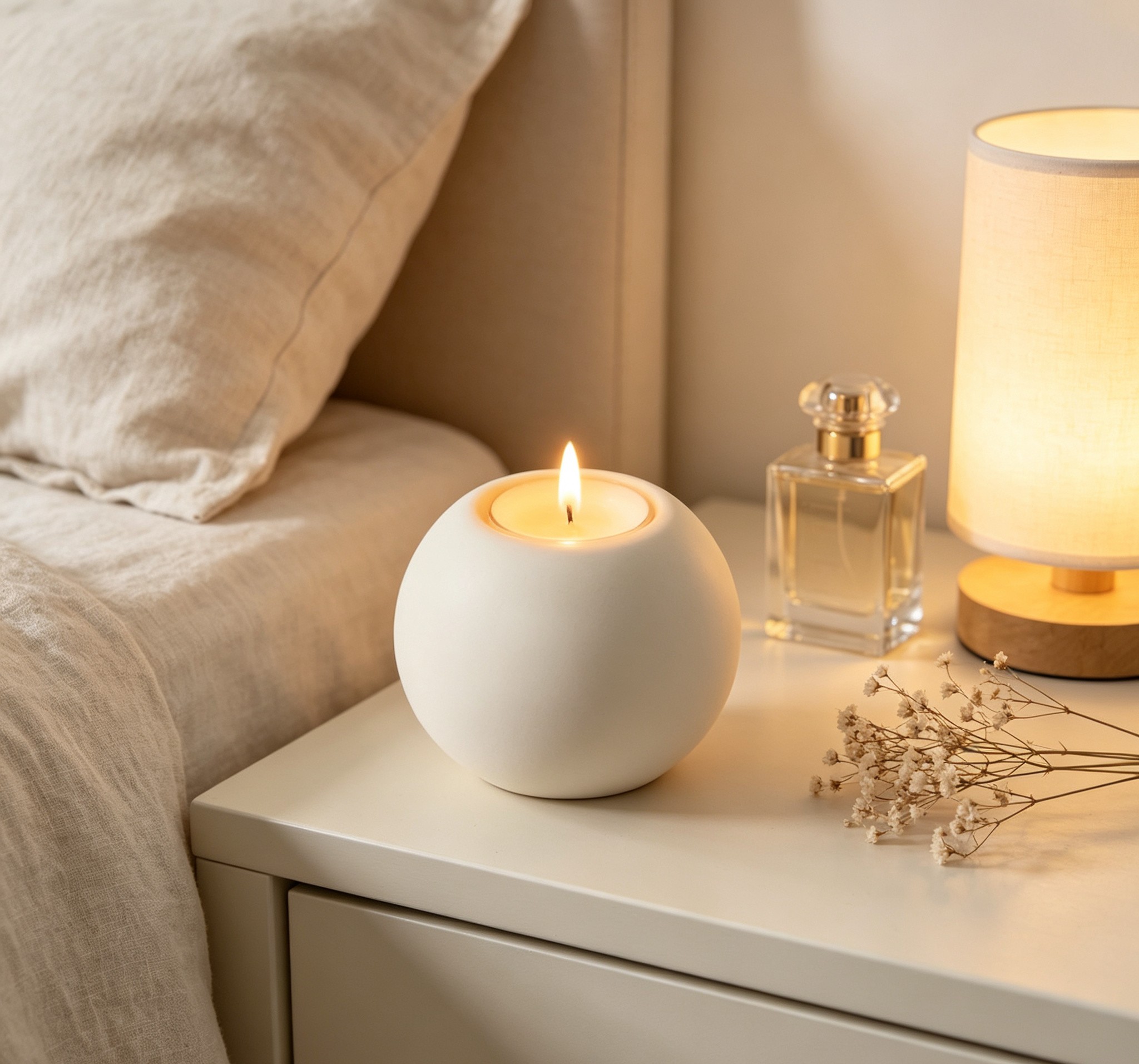
A standard tealight is a compact illumination source. It typically measures exactly 1.5 inches, or roughly 38 millimeters, in diameter and sits about 0.6 inches high. Its defining characteristic is the containment cup. Because the wax is poured directly into a small metal or polycarbonate shell, the entire candle liquefies when lit. Therefore, a Ceramic Tealight Holder must be molded with strict dimensional tolerances to accommodate this exact footprint.
Specifically, the socket must be shallow yet wide enough to allow the tealight to sit perfectly flush. If the socket is too tight, the plastic cup can warp. If it is too loose, the candle shifts, causing uneven burning.
Modern manufacturing techniques have refined the classic tealight vessel. For instance, a round matte white ceramic finish has become a staple for contemporary tabletop decor. These low-profile designs expose the flame entirely. They maximize the light output while keeping the overall structure safely close to the table surface. This low center of gravity makes them exceptionally stable and ideal for high-traffic areas like dining tables or living room consoles.
Alternatively, some artisans carve intricate geometric patterns into the clay walls before firing. When placed in a dim room, these enclosed holders project dynamic shadows across nearby surfaces. This specific application transforms a static light source into an immersive visual experience.
The primary advantage of the tealight format is operational ease. Since the liquid wax remains trapped inside its original cup, the ceramic surface stays pristine. The main limitation is the burn time. Standard tealights typically extinguish after 3 to 5 hours, which requires frequent replacement during long events.
In stark contrast, a taper candle presents a unique structural challenge. It features a tall, slender silhouette that gradually narrows from the base to the wick. The industry standard base diameter for a taper is exactly 7/8 of an inch, translating to about 22 millimeters. Heights often range from 6 to 18 inches.
To safely support this top-heavy vertical structure, a Ceramic Taper Candle Holder relies on precise socket engineering and base weighting. If the internal socket is too shallow, the tall candle lacks lateral support. If it is too wide, the candle will lean. A leaning taper is not just an aesthetic failure; it is a severe fire hazard that guarantees a messy, rapid wax drip.
The traditional candlestick solves the gravity problem with a wide, heavily weighted base, a slender stem, and a flared cup at the top. This geometry lowers the center of gravity while providing a dedicated catch-zone for dripping wax.
Furthermore, contemporary ceramic engineering has pushed these boundaries. We now see avant-garde shapes like hollow arches or U-shaped tubes holding a taper at each end. While visually striking, these modern designs still adhere to strict weight distribution rules to ensure the tall flames remain stable.
Taper holders are the undisputed choice for formal dining centerpieces. By elevating the flame above the eye level of seated guests, they provide flattering ambient light without obstructing cross-table conversations. However, buyers must accept that vertical candles will inevitably drip. Ensuring your ceramic holder has an adequate drip-catching lip is non-negotiable for protecting expensive furniture.
To make a commercially sound and functionally safe purchasing decision, you must compare these two styles across strict parameters. Aesthetic mismatches can ruin a room design, but structural mismatches can ruin your furniture.
Technical Feature | Ceramic Tealight Holder | Ceramic Taper Candle Holder |
|---|---|---|
Standard Socket Tolerance | 1.5 inches wide, shallow depth | 7/8 inch wide, deep vertical support |
Center of Gravity | Extremely low, highly stable | High, requires heavily weighted base |
Lumen Dispersion | Concentrated, upward-facing, intimate | Broad, downward-casting, functional |
Wax Containment | Self-contained, zero cleanup | Requires engineered drip-catching lip |
Overhead Clearance Needs | Minimal clearance required | Strict high clearance mandatory |
Understanding the physics of your lighting leads directly to better interior styling. Applying basic architectural principles to your candle placement will instantly elevate your space.
If you are styling a formal dining room or a tall fireplace mantel, height is your greatest asset. Use the rule of odds. Grouping ceramic taper holders in sets of three or five creates intentional asymmetry. Select pieces with varying heights but a unified matte glaze to build a staggered, sophisticated tablescape. Remember, tapers cast light downward, making them highly effective for illuminating food or menus.
If your space has low overhead clearance, such as a bookshelf, a bathroom vanity, or a coffee table under a low-hanging chandelier, tealights are the only safe option. Cluster multiple round matte white ceramic holders on a textured tray. The repetition of small flames creates a concentrated pool of light, mimicking the cozy glow of a hearth.
Premium ceramics are built to last generations, provided they are maintained correctly. Abrasive cleaning methods will permanently destroy the protective glaze.
The Thermal Contraction Method: Never use a metal knife to pry cold wax off a holder. Instead, place the ceramic piece in the freezer for two hours. The extreme cold forces the wax to contract and separate from the glaze. You can then pop the solid wax off with a gentle push of a wooden cuticle stick.
The Warm Water Flush: For large sculptural pieces that do not fit in a freezer, utilize hot tap water. Run the hot water directly over the wax residue until it softens. Wipe it away immediately with a microfiber cloth, then wash the surface with a mild degreasing dish soap to restore the original ceramic shine.
No. The socket of a standard taper holder is only 7/8 of an inch wide. It is physically impossible to fit a 1.5-inch tealight inside. Balancing a tealight on the rim is highly unstable and creates an immediate fire risk.
Wobbling occurs when the candle base is slightly smaller than the ceramic socket tolerance. You can fix this by wrapping a small strip of aluminum foil around the candle base, or by melting a few drops of wax into the socket before inserting the candle to act as an anchor.
High-quality, kiln-fired ceramics are exceptionally resistant to normal candle heat. However, thermal shock can occur if a hot holder is suddenly exposed to freezing water. Always let the ceramic cool naturally at room temperature after extinguishing the flame.
Matte glazes are slightly more porous than high-gloss finishes. To remove black soot, create a paste using baking soda and warm water. Rub the paste gently over the stain with a soft-bristled toothbrush, then rinse thoroughly and dry.
While the glazed surfaces repel moisture, the unglazed bottom foot of a ceramic holder can absorb morning dew. If this trapped moisture freezes overnight, the expanding ice can crack the clay body. Always bring your ceramics indoors after patio events.
Ultimately, your purchasing decision should be driven by your daily habits and spatial constraints. If you prioritize low-maintenance ambiance for everyday living, compact tealight designs are your best investment. Conversely, if you frequently host dinners and need functional, dramatic illumination, tall taper designs will deliver the architectural impact you need. To explore a meticulously engineered collection that guarantees both safety and premium aesthetics, find your ideal Decorative Candle Holder to instantly upgrade your home lighting experience today.


