


Views: 0 Author: Site Editor Publish Time: 2026-11-06 Origin: Site


Choosing the right ceramic tableware goes far beyond selecting a pleasing silhouette or a complementary colorway. For hospitality procurement managers and restaurateurs, the glaze finish dictates exactly how dinnerware will perform in everyday service. It resists aggressive cutlery marks. It survives extreme thermal shock. It even enhances visual presentation under moody dining room lighting. Ultimately, the glaze acts as both an invisible protective shield and the tactile soul of each piece.
With the market rapidly shifting toward modern organic textures, buyers frequently find themselves caught between aesthetic allure and long-term utility. This comprehensive buying guide outlines how to systematically compare glaze types. We will inspect for industrial-grade durability, assess environmental hygiene standards, and help you select the optimal finish for your specific dining concept.
Glaze dictates durability, not just looks: A glaze is not simply an aesthetic pigment applied to clay. It is a highly engineered vitrified glass layer that directly impacts scratch resistance, moisture porosity, and long-term stain prevention.
Matte vs. Glossy is a functional trade-off: High-gloss glazes naturally resist flatware metal marking and wash effortlessly in commercial settings. In contrast, matte finishes offer modern tactile sophistication but require high-density alumina formulations to avoid unsightly silverware scuffs.
Hybrid finishes solve practical problems: Modern engineering innovations effectively combine the scratch-free utility of gloss food surfaces with the textured visual warmth of matte exteriors.
Inspect beyond the top surface: Buyers must always assess the rim, foot ring, and edge contours for manufacturing defects like pinholes, pooling, and crazing.
Match glaze choice to operational demand: High-turnover restaurant environments must prioritize non-abrasive stackability and chemical detergent resistance. Meanwhile, boutique venues can leverage soft artisan tones for bespoke low-volume plating.
Recent search trends and market analyses indicate a significant paradigm shift in hospitality procurement. Buyers are increasingly moving away from stark hospital-white gloss plates. Instead, they lean toward earthy biophilic designs that enhance the farm-to-table narrative. Industry data suggests modern diners subconsciously associate textured matte and reactive glazes with premium locally sourced culinary experiences.
However, this aesthetic pivot brings distinct operational challenges. Procurement managers are now tasked with finding glazes that offer the visual authenticity of rustic studio pottery while possessing the rigorous durability of institutional hotelware. As a result, the demand for high-alumina matte formulations and dual-finish hybrid plates has surged globally. Modern tableware must perform flawlessly under the extreme pressures of a commercial kitchen. Simultaneously, it must tell a compelling visual story on the dining room table.
To make a truly informed procurement decision, buyers must distinguish between primary glaze formulations. Understanding how each chemical composition alters the physical performance of porcelain and stoneware is critical for ensuring long-term utility.
High-gloss glazes represent the traditional undisputed standard for commercial dining. They are characterized by a highly reflective smooth vitrified silica layer. This layer is melted at extremely high firing temperatures, often exceeding 1280°C. The primary operational benefits include an impermeable surface and frictionless cutlery movement.
Because the surface is completely non-porous, it remains impervious to aggressive commercial dishwashers and harsh alkaline detergents. However, there are minor drawbacks. Glossy surfaces can show harsh glare under direct dining room downlighting. Furthermore, surface micro-scratches accumulated over years of heavy use can eventually dull their mirror-like clarity. Nevertheless, they remain the optimal choice for high-volume banquets, casual dining chains, and everyday family dinnerware.
In contrast, matte and satin glazes are defined by their low light reflection. They feature a silky micro-crystalline surface structure that diffuses ambient light rather than reflecting it directly. These glazes provide a premium organic tabletop feel that eliminates harsh glare. This makes them highly favored for modern culinary presentation and food photography.
The main drawback is a slightly higher coefficient of friction. This renders low-fired or poorly formulated matte glazes vulnerable to metal transfer marks from soft stainless steel cutlery. Consequently, they are best suited for fine dining establishments, modern bistro table settings, and trend-focused residential collections where aesthetic presentation is paramount.
Reactive glazes are created through dynamic chemical reactions that occur during the kiln cooling process. This results in multi-toned crystalline or flowing color transitions that cannot be perfectly replicated from piece to piece. The primary benefit is the yield of one-of-a-kind pieces that bring authentic artisanal storytelling to commercial dining environments.
The inherent drawback is greater lot-to-lot batch variance. Procuring reactive glazes requires strict supplier tolerances and quality control protocols to maintain set coherence across large orders. They are highly recommended for farm-to-table concepts, upscale hotel plating, and curated boutique retail environments.
Modern ceramic manufacturing enables layered glaze techniques that beautifully blend contemporary styling with tabletop resilience. Evaluating these specific styles requires a keen understanding of both visual impact and structural integrity.
When evaluating intricate pieces, buyers must look closely at how texture interacts with structural design. Take the Speckled Matte Scalloped Rim Ceramic Tableware as a prime example. This specific style features delicate scalloped edges paired with iron-oxide specks suspended in a satin-matte ground. A critical inspection point here is the rim vulnerability check. Buyers must evaluate the glaze thickness along the scalloped contours. You need to ensure the decorative ridge does not pool unevenly during firing. Uneven glaze pooling creates weak points that chip easily during bussing. When executed correctly with a precise 0.2 mm glaze depth, this finish creates a frame-like presentation. It highlights central plating while offering vintage charm combined with contemporary matte subtlety.
To solve the friction issues commonly associated with matte surfaces, manufacturers have developed ingenious hybrid solutions. This represents a true best-of-both-worlds engineering approach. For instance, speckled gradient glossy interior tableware features a highly vitrified food basin paired with a tactile matte exterior base. The functional superiority is immediate. It eliminates knife-and-fork squeak and metal marking exactly where the food sits. Simultaneously, diners enjoy an earthy tactile grip when holding the piece.
Artisanal designs require systematic procurement strategies. Managing batch consistency becomes a primary operational challenge when dealing with gradient transitions. Buyers must establish clear color variance thresholds. You should carefully assess the tonal graduation from the rim to the center of the plate. It is crucial to define an acceptable delta-E color variance protocol with the manufacturer. This guarantees replacement open-stock inventory will still visually harmonize with the original plates months or years later.
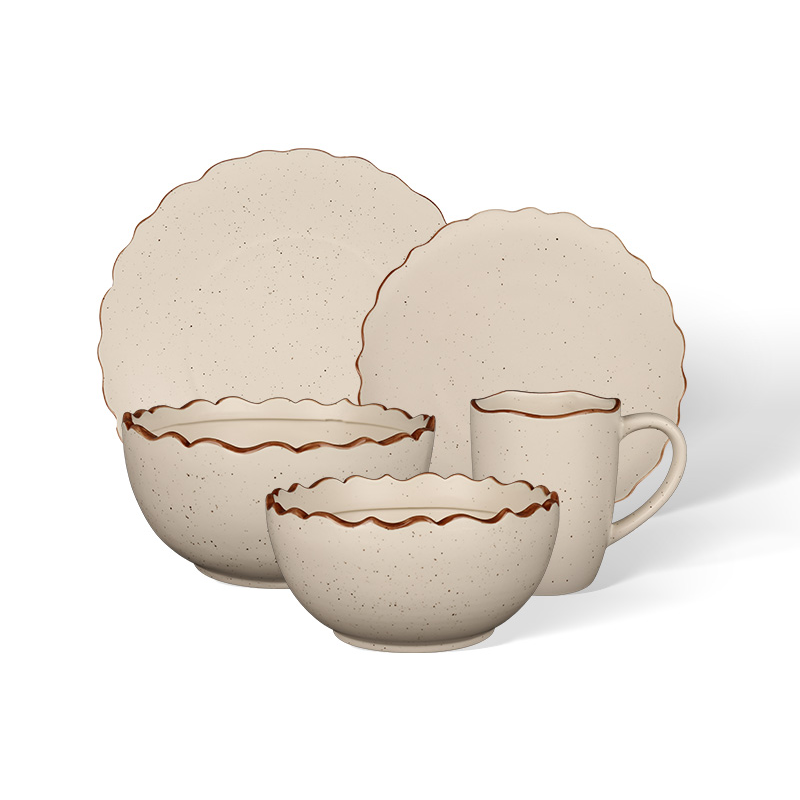
A major pain point for buyers of matte ceramic tableware is confusing true structural scratches with superficial metal transfer marking. Glaze hardness ultimately determines whether tableware stays pristine or looks gray and worn within a few short months.
Understanding the mechanism behind plate marking is essential. Specifically, when flatware made of softer stainless steel grades like 18/0 or 18/10 scrapes across a poorly fired matte glaze, it leaves microscopic gray lines of metal. These are not actual scratches in the ceramic itself. Rather, the glaze is acting like ultra-fine sandpaper against the softer metal.
The solution is sourcing tableware fired with high-alumina micro-smooth matte glazes. These are specifically engineered to reduce surface friction. If marking does occur, chemical remediation is straightforward. Buyers should test if the marks lift using mild abrasive powders to confirm the metal can be removed without damaging the underlying glaze luster.
Durability is deeply rooted in kiln physics. High-fire porcelain melted between 1280°C and 1350°C forms a deeply integrated glass-body interface. This results in a naturally harder surface, typically reaching a Mohs hardness of 6 to 7. In contrast, mid-fire stoneware requires a meticulously balanced flux formulation to prevent the glaze from shivering under mechanical stress.
Glaze depth measurements are also a critical quality control metric. Buyers must ensure the fired glaze thickness sits in the optimal range, typically between 0.15 mm and 0.35 mm. If a glaze is applied too thickly, it becomes vulnerable to spiderweb crazing. If applied too thinly, it exposes the raw clay body to pinhole vulnerabilities.
Imagine a bustling Friday night service. Plates are slammed onto stainless steel prep tables, stacked hastily by bussers, and shoved into scalding industrial dishwashers. In this high-stakes environment, the glaze acts as the hermetic seal of your tableware. Inadequate or improperly fired glazes can harbor dangerous bacteria, absorb rancid grease odors, and even leach hazardous heavy minerals into food.
A fully vitrified glaze creates an impenetrable non-porous barrier with a water absorption rate strictly under 0.5%. Buyers must conduct acid exposure testing to ensure resistance against acidic foods like citrus dressings and tomato sauces. The glaze must verify that no dulling or chemical leaching occurs after prolonged exposure. Stain resistance is equally important. Evaluating how stubborn pigments like turmeric and concentrated beet juice interact with porous versus fully vitrified matte surfaces will determine long-term visual viability.
Tableware experiences extreme temperature fluctuations in commercial environments. Verifying thermal shock limits—typically a temperature delta tolerance of 140°C to 180°C—is necessary. This prevents glaze micro-cracking when plates move rapidly from a hot warming station to an ambient dining room tabletop.
Furthermore, buyers must assess moisture seepage risks. For instance, when evaluating pastel pieces like stoneware Soft Pink Gradient Matte Tableware, checking the unvitrified foot rings is vital. Foot rings that absorb dishwasher water can cause internal steam fractures. Worse, trapped moisture can lead to scalding hot plate rims when the ceramic is subsequently microwaved.
When auditing samples or receiving production runs of bulk ceramic tableware sets, using a disciplined inspection checklist helps identify structural defects before shipping containers are approved.
Visual inspection under bright neutral lighting is the very first step in quality control. Be on the lookout for the following anomalies:
Pinholes and Pitting: Look for microscopic volcanic eruptions on the surface. These are caused by gas release during firing and will inevitably trap food particles.
Crazing: Inspect for spider-web micro-fissures. These occur from mismatched thermal expansion coefficients between the underlying clay body and the top glaze.
Crawling and Bare Spots: Identify areas where the glaze failed to properly wet the bisque during application, leaving raw unglazed patches exposed.
Waviness and Uneven Pooling: Check for glaze sagging near rims or deep wells. This is a common defect in poorly managed dip-glazing processes.
Physical touch reveals hidden flaws that the eye might easily miss. The rim test involves running your fingers firmly across drinking rims, bowl edges, and scalloped grooves. You are feeling for sharp crystal inclusions or rough raw glaze transitions. Equally important is the base foot ring inspection. Buyers must check whether the unglazed foot rings are cleanly polished. A rough foot ring will act as a harsh abrasive, severely scratching the glazed face of underlying plates when stacked in storage.
Selecting the right glaze requires aligning the physical properties of the finish with the daily operational realities of your dining establishment.
Glaze Type | Aesthetic Appeal | Cutlery Mark Resistance | Stain Resistance | Commercial Dishwasher Life | Ideal Use Case |
|---|---|---|---|---|---|
High Gloss | Classic, bright, reflective | High | Exceptional | Outstanding | High-turnover dining, banquets, daily family dining |
Satin or Low-Sheen | Understated, contemporary | Medium to High | High | Good | Upscale casual dining, modern lifestyle retail |
Standard Matte | Earthy, organic, non-reflective | Low to Medium | Medium | Moderate | Specialty plating, styling studios, display |
Dual-Finish Gloss Basin and Matte Body | Trendy yet practical | High | Exceptional | High | Cafés, premium hospitality, versatile home dinnerware |
Speckled Reactive or Gradient | Artisanal, handcrafted, bespoke | Medium to High | High | Good to High | Farm-to-table restaurants, gourmet bistros, gifts |
Investing in premium glazed ceramic dinnerware yields a strong return on investment only if the glazes are cared for with proper back-of-house washing and handling procedures.
Chemical management in the dish pit is absolutely vital. Kitchens should minimize the use of high-alkaline rinse aids. These chemicals possess the potential to slowly etch delicate matte and reactive glazes over hundreds of wash cycles. In addition, maintaining optimal water softening systems is necessary to eliminate chalky mineral deposits that permanently cloud dark finishes.
Physical abrasion during storage often causes more damage than actual dining use. Staff should be trained to use plate cradles and commercial wash racks equipped with protective polymer dividers. Cultivating a habit of avoiding dry sliding is essential. Lifting rather than dragging stacked plates prevents severe foot-to-glaze abrasion. This protocol is especially crucial for heavier textured pieces like Gradient Speckled Matte Tableware.
Even with perfect care, periodic restoration is sometimes necessary. Safe descaling protocols should be implemented quarterly to remove accumulated cutlery metal deposits. Staff should utilize non-abrasive chemical lifters rather than harsh scrubbing pads. This ensures that scalloped rims and decorative crevices are thoroughly cleaned without compromising the integrity of the vitrified glaze seal.
Comparing glaze finishes requires a delicate balance between your aesthetic vision and functional reality. While glossy plates offer easy scratch-free maintenance for busy commercial kitchens, matte and textured options provide a beautiful modern aesthetic that elevates the dining experience. Fortunately, dual-finish innovations prove that you no longer have to sacrifice practical performance to achieve artisanal charm.
Always verify glaze hardness, food-contact safety compliance, and edge vitrification before purchasing large tableware batches. By choosing the correct finish and implementing rigorous maintenance protocols, you protect your financial investment. This ensures your dinnerware looks just as stunning after its five-hundredth wash as it did on the day it was unboxed. Ready to upgrade your hospitality dining experience? Explore high-performance, commercial-grade collections at Art-Word to find the perfect balance of durability and design for your next project.
Matte tableware does not necessarily sustain deeper structural scratches into the clay body compared to glossy dinnerware. However, it is significantly more susceptible to a phenomenon known as metal marking. Standard matte glazes possess a slightly coarser microscopic texture to diffuse light and reduce glare. When flatware made from softer stainless steel alloys is scraped across this micro-abrasive surface, the ceramic acts like ultra-fine sandpaper. This friction pulls microscopic particles of metal from the knife or fork, leaving visible gray pencil-like lines on the plate. To mitigate this issue, commercial buyers should source premium high-fire matte glazes formulated with high alumina content, which drastically reduces surface friction.
Dual-finish tableware represents a highly engineered solution that addresses the conflicting demands of commercial dining. It balances the need for aesthetic differentiation with the necessity of operational durability. It combines a highly vitrified glossy interior food basin with a textured matte exterior. For restaurant operators, this hybrid approach is exceptionally practical. The glossy interior ensures that the food-contact surface remains completely non-porous, highly resistant to stubborn stains, and immune to gray metal scuff marks. Meanwhile, the matte exterior provides the modern handcrafted aesthetic that contemporary diners prefer.
Removing metal transfer marks from matte ceramic surfaces requires a chemical approach rather than a harsh mechanical one. Aggressive scrubbing can permanently dull or damage the glaze. Because the gray lines are simply metal deposits from softer stainless steel flatware, they can be lifted using a mild acid. The most effective method involves using an oxalic acid-based cleaning powder. Sprinkle a small amount of the powder directly onto the wet scuff marks. Using a soft damp microfiber cloth, gently buff the area in circular motions. Once the marks disappear, rinse the tableware thoroughly with warm water.
The structural vulnerability of a scalloped rim depends entirely on the manufacturing precision and the glaze application technique. Because scalloped plates feature distinct undulating ridges and peaks, they present uneven surfaces during the firing process. If manufactured poorly, the glaze can thin out at the highest points of the scallops and pool heavily in the grooves. High-quality scalloped tableware undergoes rigorous production controls, such as automated uniform spray application, to ensure an even glaze distribution. When the glaze thickness is consistent, the scalloped edges remain fully vitrified and structurally reinforced against chipping.
Yes, reactive and gradient matte stoneware can be safely subjected to microwave heating and commercial dishwashing, provided that the underlying clay body has been fully vitrified during the firing process. Vitrification is the process by which the clay particles melt and fuse together, reducing the material porosity to near zero. The critical inspection point is the unglazed foot ring at the base of the plate. If the stoneware is not fully vitrified, the unglazed foot ring will absorb moisture during the dishwashing cycle. When that moisture-laden plate is subsequently placed in a microwave, the trapped water rapidly turns into steam, which can cause thermal stress and internal micro-cracking.
Firing temperatures directly control the chemical melt and crystallization phases of reactive glazes. Even a minor temperature fluctuation of 10°C inside the kiln can alter how metallic oxides like copper or cobalt behave during the cooling cycle. Higher peak temperatures generally increase glaze fluidity, creating dramatic gradient drips, while slightly lower temperatures might yield a more static speckled finish. Because commercial kilns have subtle hot and cold zones, achieving 100% color uniformity across a massive batch is nearly impossible. This is why buyers must establish acceptable color variance thresholds before placing bulk orders.
If the matte glaze is fully vitrified and formulated with stable silica-to-alumina ratios, it will easily withstand acidic foods like lemon juice, vinegar, and tomato sauce without degrading. However, poorly formulated or under-fired matte glazes can suffer from acid leaching. In these cases, prolonged exposure to acidic ingredients can slowly etch the surface, causing it to look chalky, discolored, or permanently stained. Procurement managers must always request independent laboratory testing confirming acid resistance before deploying new tableware into a commercial kitchen.


