


Views: 0 Author: Site Editor Publish Time: 2026-11-10 Origin: Site


Picture a quiet Sunday morning. The rich, earthy aroma of freshly steeped oolong fills the air. Yet, the mismatched cups on your table disrupt the peaceful ambiance. Visual harmony is not just about vanity. It fundamentally elevates your daily drinking experience. It transforms a routine beverage into a mindful ritual.
Many tea enthusiasts struggle to build a cohesive collection. You might find a stunning ceramic brewing vessel. Later, you realize it visually fights with your existing delicate cups. Successfully coordinating your collection requires a careful balance. You must align colors, surface textures, and glaze finishes. Every element on the table needs to speak the exact same design language.
Recent market data reveals a fascinating shift in consumer behavior regarding tableware. Over the past year, industry analyses show a 40 percent surge in demand for tactile, biophilic ceramics. Buyers are actively abandoning sterile, uniform factory sets. Instead, they seek artisanal imperfections and nature-inspired palettes like sage, terracotta, and mint green. This trend highlights a growing consumer desire for sensory-rich, grounding physical objects to counter our fast-paced digital lives. People want tableware that feels alive.
In this technical guide, we will explore the art and science of harmonizing your tea ware. We will cover the nuances of kiln-fired glazes. We will calculate precise volumetric proportions. By the end, you will know exactly how to curate a flawless, uninterrupted pouring experience that reflects your personal style.
When constructing a comprehensive tea service, the primary brewing vessel serves as your foundational building block. Understanding the material science behind this centerpiece is essential for making a long-lasting investment. Why do professionals insist on ceramics? High-fired porcelain and dense stoneware possess inherent thermodynamic properties that make them vastly superior for traditional tea preparation.
Exceptional Heat Retention
The primary functional advantage of a quality ceramic pot lies in its thermal mass. Ceramics are extraordinary insulators. Once pre-heated with boiling water, the thick clay walls absorb and retain thermal energy. This maintains the optimal brewing temperature for extended periods. A stable temperature profile is absolutely critical. It extracts the complex polyphenols and volatile aromatic compounds found in premium loose-leaf teas. This guarantees a full-bodied flavor profile from the first pour to the last.
Flavor Purity and Versatility
High-quality, fully vitrified glazes create an impermeable barrier over the porous clay body underneath. For instance, a high-density ceramic teapot fired at 1280 degrees Celsius offers a water absorption rate of less than 0.5 percent. Unlike unglazed clay pots, which absorb oils over time and require dedicated use, a glazed ceramic surface remains entirely neutral. This non-reactive quality allows you to brew a delicate white tea in the morning and a robust black tea in the afternoon. You can use the exact same vessel without any fear of flavor cross-contamination.
The Visual Anchor of the Table
From a spatial design perspective, the teapot acts as the structural anchor of your tea station. Its silhouette, overall height, and dominant color establish the baseline aesthetic. The surrounding cups, saucers, and bamboo accessories function as complementary accents. By selecting a defining centerpiece first, you can strategically build outward. This ensures subsequent additions seamlessly harmonize with your focal point.
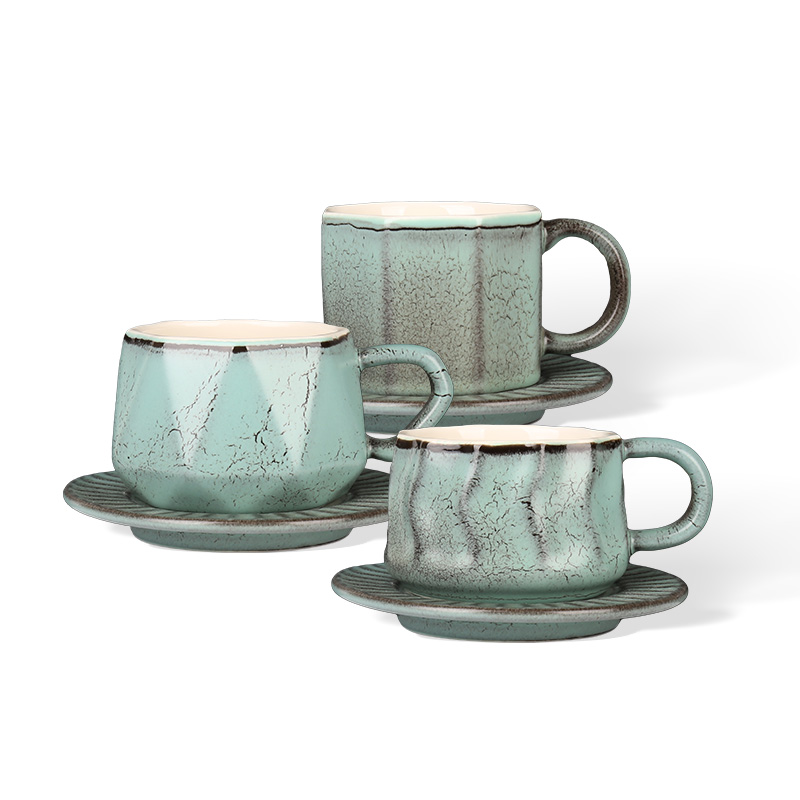
Matching ceramics is rarely about finding identical pieces. It is about establishing a cohesive visual language. To achieve a sophisticated look, buyers must evaluate three primary aesthetic variables. These are color theory, surface texture, and glaze formulation.
Color Theory in Tea Sets
Applying basic color theory prevents a chaotic table setting. Buyers generally succeed using one of three proven approaches. The monochromatic approach utilizes varying shades of a single hue. Think of a dark forest green pot paired with lighter mint green cups. In contrast, the complementary method pairs colors opposite each other on the color wheel. A warm terracotta pot alongside cool green accessories creates vibrant contrast. Finally, neutral framing uses a stark white, matte black, or natural clay centerpiece. This allows vibrantly colored cups to stand out as the primary visual interest.
The Science of Crackle Glaze
Crackle glaze was historically known in pottery circles as crazing. It was originally a firing defect. Master artisans eventually learned to control and celebrate this phenomenon. It occurs when the glass-like glaze and the underlying clay body expand and contract at different rates. This happens during the rapid kiln cooling process. This intense thermal tension creates a network of microscopic fissures across the surface. When sunlight hits these intentional fractures, it adds profound depth. It gives the ceramic a multi-dimensional appearance that flat paints simply cannot replicate.
The Role of Embossed Textures
Tactile engagement is a crucial component of the drinking ritual. Embossed textures are raised patterns created by pressing carved molds into wet clay before firing. They dramatically elevate the sensory experience. These patterns create dynamic shadows and highlights. They interact beautifully with glossy glazes and make the cup a joy to hold.
To build a coordinated set, you must first identify your preferred interior design aesthetic. Mint green crackle glazes offer a remarkably versatile foundation. You can easily adapt them to various stylistic preferences. Let us explore how specific iterations of this aesthetic match with corresponding centerpieces.
A vibrant, saturated mint green injects botanical energy into any dining space. This style utilizes green to evoke feelings of tranquility and growth. When you incorporate Green Embossed Mint Crackle Glaze Cup Saucer Sets into your collection, you introduce crisp, well-defined raised patterns. Think of winding vines or delicate lotus petals. These catch the morning light and highlight the intricate crackle network beneath the surface. Pair these sets with a pristine, glossy white teapot. The stark white background allows the mint green to pop vibrantly.
The rustic aesthetic prioritizes warmth, comfort, and approachable charm. For those who love this welcoming vibe, Rustic Embossed Mint Crackle Glaze Cup Saucer Sets frequently incorporate earthy elements. You will often see exposed, unglazed clay at the base and a slightly muted mint hue. The embossing tends to be organic and asymmetrical. This specific style demands a grounded centerpiece. Look for a teapot with a matte finish and a tactile wooden handle. Earth tones like warm grey or natural terracotta pair flawlessly here.
For individuals who appreciate formal entertaining, traditional styling is the ideal choice. Traditional Embossed Mint Crackle Glaze Cup Saucer Sets are characterized by strict symmetry and classic silhouettes. You might notice gently scalloped edges or elevated pedestal bases. The embossing often reflects classical architectural motifs. A formal set requires an equally formal centerpiece. Match these cups with an elegantly fluted teapot. Subtle metallic accents on the teapot rim can elevate the entire collection.
There is a distinct market for buyers who value absolute uniqueness. Handmade Embossed Mint Crackle Glaze Cup Saucer Sets celebrate beautiful imperfections. Because they are meticulously hand-thrown on a wheel, no two cups will ever possess the exact same shape or crackle pattern. This individuality is the true hallmark of artisanal craftsmanship. Pair them with an equally unique, hand-thrown centerpiece. Avoid perfectly symmetrical factory shapes. Opt for a teapot that proudly displays subtle throwing lines.
Aesthetic coordination captures the eye. Functional coordination ensures a seamless user experience. The most common pitfall buyers encounter is purchasing a beautifully matched set where the volumetric proportions are entirely misaligned. This leads to awkward pauses during service.
The Golden Ratio of Pouring
A perfectly coordinated tea set operates on a strict mathematical ratio. The liquid capacity of your teapot must safely accommodate the total volume of the cups you intend to serve simultaneously. You also need a small margin left over to prevent messy spillage. For instance, if you regularly serve four people, and your coordinated cups hold 200ml each, you require a teapot with a functional capacity of at least 850ml to 900ml. If the pot is too small, you must awkwardly pause to re-boil water. If the pot is drastically too large, the remaining water will sit on the leaves. This causes the tea to over-steep and become unpleasantly bitter.
Weight and Balance Considerations
Ceramics are inherently dense materials. A 1000ml pot filled to the brim with near-boiling water carries significant weight. Buyers must ensure that the handle design provides adequate ergonomic leverage. Furthermore, the physical weight of the pot must visually balance with the sturdiness of the cups. Delicate, 2mm-thin porcelain cups look disjointed and vulnerable next to a massive stoneware pot.
Teapot Capacity ml or oz | Ideal Cup Size ml or oz | Number of Servings | Best Engineering Use Case |
|---|---|---|---|
150ml 5 oz | 30ml - 50ml | 3 - 4 | Gongfu style, premium Oolong, aged Pu-erh |
400ml 13.5 oz | 100ml - 150ml | 2 - 3 | Intimate morning tea for two |
800ml 27 oz | 150ml - 200ml | 4 - 5 | Standard family afternoon tea service |
1200ml+ 40 oz+ | 200ml - 250ml | 5 - 6+ | Large social gatherings, robust breakfast black teas |
Creating a dedicated tea station is a highly practical approach to organizing your brewing equipment. A well-designed space protects delicate ceramics from accidental chips. It also serves as a stunning visual centerpiece in your dining room. Spatial organization should prioritize workflow efficiency and aesthetic harmony.
The focal point of any functional tea station is the brewing vessel. Placing your high-quality ceramic teapot at the center establishes a clear visual anchor. Surrounding this centerpiece with coordinated accessories creates deep intentionality. The tactile embossed patterns on your cups naturally catch ambient room light. This highlights the intricate crazing of the crackle glaze.
When considering storage, open wooden shelving is highly recommended. Open shelving allows for adequate ambient airflow. This is essential for ensuring that the unglazed bottom rims of ceramics remain dry, thereby preventing mold growth. If your tea station is in a high-traffic area, place a slotted bamboo tray underneath your set. This provides a defined boundary and captures accidental spills.
Component Category | Recommended Material Profile | Primary Workflow Function |
|---|---|---|
Foundation | Slotted Bamboo or Walnut Tray | Provides a stable, water-resistant base and defines the brewing boundary. |
Primary Vessel | Glazed Ceramic Teapot | Acts as the central heat-retaining vessel for optimal flavor extraction. |
Serving Cups | Mint Crackle Glaze Ceramics | Delivers the brewed tea while providing a tactile sensory experience. |
Textiles | Natural Linen Runners | Absorbs minor drips and dampens the sound of ceramics contacting hard surfaces. |
Understanding the rigorous manufacturing process behind your tea ware is crucial for proper maintenance. High-quality ceramics are typically fired in massive kilns at temperatures exceeding 1200 degrees Celsius. This extreme heat causes the clay body to vitrify. It transforms into a dense, non-porous material that excels at resisting physical impact.
To protect the structural integrity of delicate glazes, strict adherence to manual cleaning protocols is required. Dishwashers utilize harsh, abrasive alkaline detergents. They subject items to aggressive water pressure. This combination can rapidly degrade embossed textures and strip the protective sheen from the glaze. Instead, hand wash your ceramics using lukewarm water and a mild, pH-neutral dish soap.
Furthermore, users must actively avoid thermal shock. Pouring roiling boiling water into a freezing cold ceramic pot can cause the underlying clay body to violently fracture. Always pre-warm your vessels. Swirl warm tap water inside before introducing boiling temperatures.
Over years of regular use, crackle glaze ceramics undergo a natural transformation known as patina development. Tannins and essential oils from the tea gradually seep into the microscopic crazing lines. This darkens the fissures into deep amber hues and creates a beautiful, antiqued appearance. Connoisseurs highly prize this evolution.
Making an informed purchasing decision requires evaluating multiple objective criteria. A systematic approach prevents mismatched aesthetics and functional incompatibilities. This ultimately saves buyers both time and money.
Verify Glaze and Texture Compatibility
Visual harmony relies heavily on the interaction between different finishes. If your primary brewing vessel features a high-gloss finish, pair it with cups that share a similar reflective quality. This creates a sleek, cohesive look. Conversely, if you aim for an earthy aesthetic, cups featuring unglazed bottom edges pair exceptionally well with raw stoneware pots.
Calculate Volumetric Proportions
Functional matching is critical. Verify the exact milliliter or ounce capacity of both the teapot and the cups in the product specifications. Do not rely on photographs. Images can heavily distort scale. The teapot capacity should be a nearly exact multiple of the cup capacity.
Confirm Material Safety Standards
Always prioritize your health. Ensure that product descriptions explicitly state the use of food-safe, lead-free, and cadmium-free glazes. This is particularly vital for crackle glazes. The micro-fissures come into direct, prolonged contact with the mildly acidic nature of the tea.
Building a beautifully coordinated tea set requires careful planning and a solid understanding of design principles. Balancing visual aesthetics with practical functionality ensures a vastly superior brewing experience. A high-quality ceramic teapot naturally enhances your daily ritual through superior heat retention and flavor purity.
Thoughtfully matching your teapot with beautifully textured cups brings lasting joy. By taking the time to evaluate glaze compatibility, volumetric capacity, and safety standards, you guarantee a perfect, harmonious tea table. Ready to curate your perfect tea station? Explore a meticulously crafted collection of premium ceramics and find the exact pieces to complete your vision at art-word.com.
Yes, mixing and matching different styles is a highly popular approach in modern tableware design. The fundamental rule for successful mixing is to maintain at least one strong unifying element across all pieces. This could be a consistent color palette, such as utilizing various shades of mint green. It could also be a shared textural element, like a specific crackle glaze finish. By anchoring the collection with a shared visual trait, the resulting tea set looks intentional and thoughtfully curated.
The optimal method for cleaning crackle glaze ceramics is gentle manual hand washing. You should use lukewarm water combined with a mild, non-abrasive dish detergent. It is critical to avoid dishwashers. The high-pressure water jets and harsh alkaline chemicals can erode delicate embossed textures and dull the glaze over time. Additionally, avoid using steel wool or heavy-duty scrubbing pads. These will inflict micro-scratches on the surface, permanently damaging the visual integrity of the intricate crazing pattern.
To determine the correct sizing compatibility, you must reference the exact milliliter or fluid ounce capacity listed in the manufacturer specifications. Divide the total capacity of the teapot by the capacity of a single cup. For instance, if you own a 1000ml teapot and are purchasing 250ml cups, the math dictates that you will yield exactly four full cups per brewing cycle. This precise matching ensures that no excess water remains in the pot to over-extract the tea leaves.
Handmade ceramic tea sets are entirely safe for daily use, provided they are sourced from reputable manufacturers. The primary safety concern involves the chemical composition of the glaze. Professional potters utilize modern, food-safe glazes that are strictly lead-free and cadmium-free. As long as the ceramics have been fired to the appropriate maturation temperature, they will be highly durable, non-toxic, and perfectly suited for your daily rituals.
Empirical evidence shows that the geometric shape of a brewing vessel directly impacts flavor extraction. The shape dictates how thermal currents move through the water and how much physical space the tea leaves have to expand. Round-bellied teapots are generally considered superior for loose-leaf teas. The spherical interior allows large, rolled leaves ample room to unfurl completely. This unrestricted expansion maximizes the surface area contact between the water and the leaves, resulting in a more robust flavor profile.
Dripping is a common engineering flaw related to the spout design. To prevent this, look for a teapot where the tip of the spout is level with or slightly higher than the rim of the teapot opening. Additionally, a sharp, well-defined V-shaped cut at the very tip of the spout helps cut the water flow cleanly. If you already own a dripping pot, pouring with a confident, steady motion rather than a slow trickle can utilize fluid dynamics to break the surface tension and reduce drips.
The primary difference lies in firing temperature and clay density. Porcelain is fired at extremely high temperatures, resulting in a dense, glass-like, and slightly translucent material. It has a lower thermal mass, making it ideal for delicate green or white teas that require faster heat dissipation. Stoneware is fired at slightly lower temperatures and features thicker walls. It boasts incredible thermal mass and heat retention, making it the superior choice for robust black teas, oolongs, and aged pu-erh that require sustained high brewing temperatures.


