


Views: 0 Author: Site Editor Publish Time: 2026-08-14 Origin: Site


Finalizing interior styling requires balancing aesthetic permanence with functional safety when selecting lighting accessories. While glass and metal serve specific purposes, fired clay offers superior texture and structural presence. Selecting the wrong finish, weight, or dimension leads to unstable candles, wax damage, or visual clutter. You need pieces that ground a room without creating fire hazards or maintenance headaches. This guide provides a technical evaluation framework for selecting a Ceramic Candle Holder based on interior design architecture, functional stability requirements, and procurement scale. We evaluate how different glazes interact with ambient light, how base weight dictates safety, and how specific shapes complement spatial voids. You will learn to match the physical properties of fired clay to the specific demands of your interior environment, ensuring every piece serves as both a functional tool and a deliberate architectural accent.
Aesthetic Alignment: Matte, unglazed ceramics soften modern interiors, while high-gloss glazes suit traditional or maximalist spaces.
Structural Safety: Base weight and socket diameter dictate usability; stemmed holders require a disproportionately heavy base to prevent tipping.
Form as Function: An abstract geometric ceramic candlestick serves as standalone architectural decor even when unlit.
Material Synergy: Most interiors benefit from layering the opaque permanence of ceramic with the transparent, airy qualities of glass.
Procurement Strategy: Evaluating kiln-firing quality and glaze consistency is critical, whether purchasing a single statement piece or sourcing for seasonal holiday gift wholesale retail.

Material selection dictates the mood and physical grounding of a room. You must contrast the opaque, solid nature of clay against the transparency of glass and the coldness of metal. Glass allows light to pass through, creating an airy, transient feel that works well in small spaces but often lacks visual anchor points. Metal reflects light but frequently feels industrial, sterile, or overly formal. Clay absorbs light and anchors a space. It provides immediate visual weight. When you place a dense clay piece on a delicate glass table or a highly polished marble console, it instantly grounds the arrangement and stops the eye from sweeping past the surface.
The tactile nature of fired clay introduces organic warmth into highly polished environments. Modern architecture often relies on flat drywall, sleek glass windows, and sharp right angles. These spaces easily feel uninviting or clinical. Introducing clay adds a subtle, earthy texture that breaks up the monotony of flat surfaces. Even when coated in a thick glaze, the underlying material retains a sense of human touch and natural origin. This warmth makes sterile rooms feel lived-in and comfortable, bridging the gap between stark modernism and comfortable residential living.
Glazes offer precise color-matching capabilities that other materials simply cannot replicate. Metal is limited to various metallic tones or powder-coated finishes that often look cheap. Glass relies on transparency, meaning its color changes depending on the light source and the background behind it. Glaze provides solid, unchanging blocks of color. You can match a glaze exactly to a heavy linen textile, a matte wall paint, or a patterned accent rug. This allows for tight control over the interior palette. You can introduce a bold mustard yellow, a deep navy, or a muted terracotta with absolute opacity, ensuring the color remains consistent regardless of the time of day.
Effective room styling relies heavily on material layering. A balanced room rarely uses just one material for all its accessories. It utilizes both the structural contrast of clay and the lightness of glass. You might pair a heavy, opaque clay base with a delicate glass hurricane sleeve, or place a matte clay piece next to a polished brass tray. This synergy prevents a room from feeling too heavy or too fragile. It creates depth, visual interest, and a layered aesthetic that feels collected over time rather than purchased all at once.
You must acknowledge the conceptual trade-offs of the material. Clay has inherent physical limitations. It is vulnerable to chipping if dropped or struck against a hard surface. Unglazed surfaces are highly porous and prone to absorbing oils and stains. Yet, the benefits heavily outweigh these drawbacks in most interior applications. Clay offers exceptional heat resistance, protecting your wooden furniture from burning wax and heat transfer. It also provides unmatched sculptural versatility, allowing artisans and manufacturers to create complex, asymmetrical shapes that are impossible to achieve with blown glass or forged metal.
The finish of the clay dictates how it interacts with light and how it fits into your broader design scheme. You must choose between matte, unglazed, and glossy surfaces based on the room's architectural style and your willingness to perform routine maintenance.
Unglazed and matte finishes align perfectly with Japandi, Minimalist, Wabi-Sabi, and Rustic interiors. These design philosophies prioritize natural materials, muted tones, and imperfect beauty. A matte surface absorbs ambient light rather than reflecting it. It softens harsh architectural lines and prevents glare from overhead lighting. This finish emphasizes the handmade, organic origin of the clay, drawing attention to its raw texture rather than a shiny, manufactured coating. It feels authentic and grounded.
You must face the maintenance reality of unglazed clay. The surface is highly porous, acting much like a hard sponge. If colored wax drips onto an unglazed base, the liquid wax will seep deep into the microscopic pores of the clay. Removing this wax without leaving a permanent, dark stain is exceptionally difficult. You often have to rely on glass drip protectors or commit to using only high-quality, dripless white tapers to preserve the aesthetic integrity of the piece. Dust also clings more readily to matte surfaces, requiring frequent wiping with a dry microfiber cloth.
High-gloss and reactive glazes suit Mid-Century Modern, Traditional, Eclectic, and Maximalist interiors. These styles often embrace bold contrasts, rich colors, and reflective surfaces to create a sense of luxury or vibrancy. A high-gloss glaze reflects ambient light, adding a layer of sophistication and brightness to the room. It provides a striking high contrast when placed against matte textiles like linen tablecloths, velvet runners, or raw wood dining tables.
The maintenance reality here is much more forgiving. A glossy glaze completely seals the porous clay beneath it, creating a glass-like barrier. If wax drips, it pools on the surface and hardens without penetrating the material. You can usually pop it off easily once it cools. Glossy surfaces also resist soot staining from smoking wicks. A quick wipe with a damp cloth restores the piece to its original shine, making it ideal for high-use areas like dining rooms or busy entryways.
When evaluating finishes on-site or during procurement, follow this standard inspection protocol:
Run a fingernail gently across the base edge to check for hidden burrs or sharp unglazed spots that could scratch furniture.
Inspect the inner walls of the socket for excessive glaze pooling, which reduces the diameter and prevents tapers from fitting securely.
Hold the piece under warm LED lighting to evaluate the true color reflection, as warehouse fluorescent lighting often distorts glaze hues.
Check the transition line between the glazed body and the unglazed bottom foot for clean, even application without jagged drips.
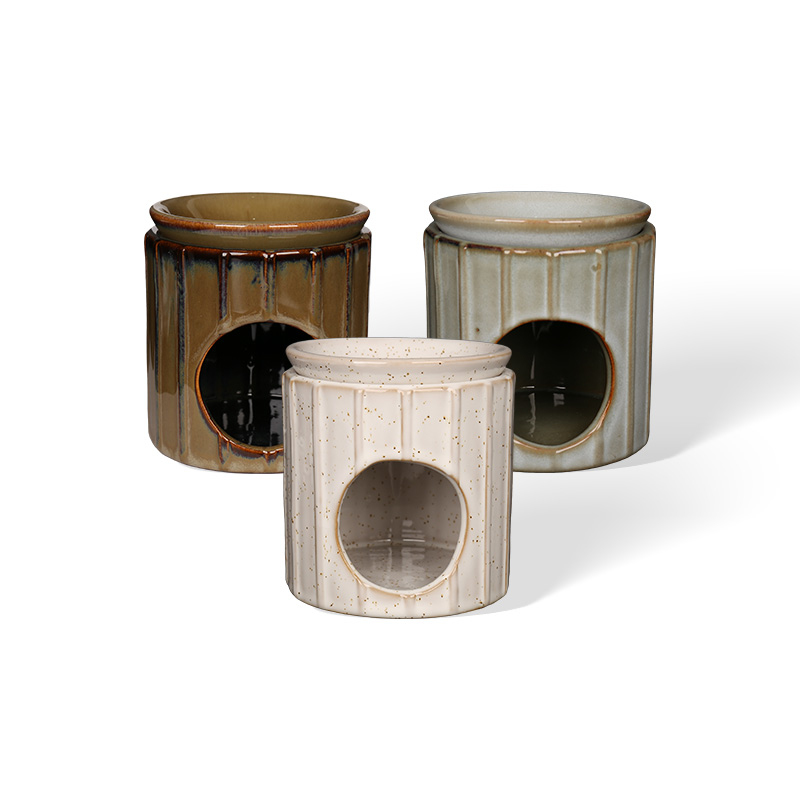
The physical form of the piece must interact logically with the space around it. You are not just buying a functional item to hold a flame; you are selecting a micro-architectural element that alters the visual flow of your room.
An abstract geometric ceramic candlestick serves as a sculptural focal point. It bridges the gap between a pure art object and functional utility. These pieces often feature asymmetrical arches, stepped bases, or negative space cutouts that draw the eye through the object rather than just to it. They command attention even when unlit, acting as standalone decor. The design function is to introduce complex, unexpected shapes into rooms that might otherwise feel too linear, predictable, or rigidly structured.
Placement strategy is essential for abstract shapes. They require breathing room to be fully appreciated. Place them on minimalist mantels where they can stand alone against a blank wall, allowing their silhouette to act as art. They also work exceptionally well on entryway consoles to create an immediate visual impact for guests. Alternatively, use them as asymmetrical dining centerpieces. Pairing a tall geometric piece with a shorter, contrasting shape breaks up the rigid symmetry of a long rectangular dining table, creating a more dynamic and modern tablescape.
Traditional taper and pillar podiums play a completely different role in spatial planning. They rely on symmetry, repetition, and height variation. In classic interior styling, symmetry creates a sense of order, calm, and formality. A matching pair of tall taper bases flanking a fireplace mantel or a large mirror is a timeless design choice. They frame the focal point of the room and provide a structured boundary to the arrangement.
You can use varying heights strategically to manipulate spatial perception. In rooms with low ceilings, clustering three or five pillar podiums of staggered heights creates a strong vertical visual line. This tricks the eye into looking upward, making the ceiling feel higher than it actually is. It adds grandeur and verticality without requiring any structural changes to the room. Grouping them tightly on a round tray also consolidates their visual weight, turning multiple small items into one substantial centerpiece.
Chambersticks and handled designs integrate a functional loop, grip, or elongated tray into the base. This design bridges historical utility with modern safety and convenience. Historically, the handle allowed people to carry a light source safely from room to room in the dark. Today, it offers a secure way to move the piece without touching hot wax or a heated base, while also providing a wider footprint that catches drips.
These designs are ideal for specific, intimate placements. They belong on bedside tables, reading nooks, or transitional spaces like hallway ledges. If you frequently relocate the piece from a home office desk to a bathroom ledge for evening relaxation, a handled design provides the necessary mobility. It also adds a quaint, traditional silhouette to modern spaces, offering a subtle nod to historical design without feeling outdated.
Aesthetic appeal means nothing if the piece cannot safely hold a lit flame. You must evaluate the physical mechanics of the design, focusing on tolerances and weight distribution, before making a final selection for any interior project.
Socket tolerances are a frequent pain point in clay production. The industry-standard dimension for a taper base is typically 7/8 inch. However, wet clay shrinks significantly during the drying and kiln-firing process. This shrinkage rate varies between 10% and 15%, depending on the specific clay body (stoneware versus earthenware) and the peak firing temperature. As a result, socket consistency is notoriously difficult to maintain. You will often find sockets in the same batch that are slightly too wide or slightly too narrow.
You need professional mitigation tactics for securing loose tapers. Never force a thick taper into a narrow clay socket; the outward pressure will easily crack the rim. If the socket is too wide, use wax stick-um, which is a tacky adhesive putty designed specifically for this purpose. Alternatively, melt a few drops of wax directly into the base before inserting the taper, holding it steady until it cools. For a completely mess-free option, wrap the base of the taper in a small strip of aluminum foil to increase its diameter until it fits snugly against the clay walls.
Center of gravity is a non-negotiable safety metric. You must define the necessary base-to-height weight ratio before placing a piece in a high-traffic area. Stemmed or elevated designs that support large pillar candles pose a significant tipping hazard. The base must be disproportionately heavy to counteract the weight of the dense wax above it. If you tap the table and the piece wobbles even slightly, the center of gravity is too high, and the piece is unsafe for use.
Surface protection is equally important. Fired clay, especially the unglazed foot ring at the very bottom of the piece, acts like coarse sandpaper. It will easily scratch high-end wood veneers, glass tabletops, or polished marble surfaces. Always check the underside of the base. It should be leveled perfectly flat and sanded smooth by the manufacturer. Ideally, it should feature a felted pad, silicone bumpers, or a cork backing to protect your furniture from permanent gouges.
Design Profile | Base Diameter Requirement | Maximum Safe Candle Height | Primary Stability Risk |
|---|---|---|---|
Low Chamberstick | 4 to 6 inches | 10 inches (Taper) | Minimal risk; wide base catches drips and prevents tipping. |
Tall Geometric Stem | Minimum 5 inches | 12 inches (Taper) | High center of gravity; requires a dense, solid clay foot. |
Wide Pillar Podium | 6 to 8 inches | 8 inches (Pillar) | Uneven base leveling causing the heavy pillar to lean. |
Asymmetrical Arch | Varies by design | 8 inches (Taper) | Off-center weight distribution pulling the piece to one side. |
How you source these items depends entirely on your scale. Buying a single centerpiece for a residential dining room requires a different evaluation process than stocking a retail shelf or outfitting a large hospitality venue.
You must know the inspection criteria for quality clay products. Check the surface for glaze crazing. Crazing looks like a network of fine, spiderweb cracks under the surface of the glaze. While sometimes intentional for a decorative, antique effect, unintentional crazing weakens the piece and harbors dirt and soot over time. Inspect the structural integrity for hairline cracks, particularly around the socket rim and the base joint. Ensure the base is perfectly level; a rocking base is a severe fire hazard that cannot be fixed with felt pads.
Understand the difference between hand-thrown and slip-cast production. Wheel-thrown studio pieces offer unique variations. You will often see trimming marks on the base or slight asymmetries that prove human craftsmanship. They require more labor and time to produce. Slip-cast models are made by pouring liquid clay into plaster molds. This method ensures strict uniformity for volume production, making it ideal for matching sets, hospitality build-outs, or large-scale inventory orders where consistency is required.
When sourcing for seasonal holiday gift wholesale retail, scalability is your primary concern. Retail buyers and corporate gifters must evaluate criteria beyond mere aesthetics. Packaging durability is paramount; clay is fragile, and shipping damages destroy inventory yields. You must ensure the packaging is drop-test certified, utilizing custom-molded foam or heavy corrugated inserts. The design must also have broad aesthetic appeal to move quickly off the shelves and appeal to a wide demographic.
Trend forecasting plays a vital role in inventory management. Avoid overly specific seasonal motifs if you want to minimize dead stock after a holiday passes. Instead, select versatile, neutral clay pieces. A matte white geometric shape or a deep forest green pillar base transitions seamlessly from holiday-specific decor to year-round inventory. This strategy protects your investment and appeals to consumers looking for long-term value rather than disposable seasonal items.
Owning clay decor requires specific maintenance protocols to ensure longevity, preserve the finish, and maintain strict safety standards in residential or commercial spaces.
Thermal shock is a hidden risk that destroys many clay pieces. Clay is highly heat resistant, but rapid, localized temperature changes cause it to fracture. This risk peaks if a flame burns down entirely into the socket. The intense, concentrated heat expands the clay immediately surrounding the socket, while the rest of the base remains cool. This differential expansion causes immediate structural failure, often splitting the socket in half. Always extinguish flames before they reach the rim, leaving at least half an inch of wax above the clay.
You need safe wax removal protocols. Never use sharp metal tools like knives, scissors, or screwdrivers to pry hardened wax out of a socket. Metal will scratch the glaze instantly and leave dark, permanent marks that cannot be buffed out. Instead, follow this safe removal process:
Place the entire piece in the freezer for two to three hours.
Allow the extreme cold to shrink the wax, pulling it away from the clay walls.
Remove the piece from the freezer and immediately tap the base gently with your hand.
Use a wooden cuticle stick or a plastic scraper to pop the contracted wax out cleanly.
Wipe the socket with a soft cloth to remove any residual oils before inserting a new taper.
Frame this purchase as a long-term decor investment. High-quality clay pieces last generations if treated correctly. Longevity requires proper storage. When rotating pieces out of seasonal use, do not simply toss them into a plastic bin where they can collide. The friction of clay rubbing against clay will chip the glazes and grind down the edges. Wrap each piece individually in padded material, foam pouches, or heavy bubble wrap, and store them in temperature-stable environments to prevent moisture buildup.
Measure your intended surface areas to ensure the base diameter will not overhang edges or crowd other decor elements.
Determine your preferred light source format to dictate the required socket size and depth before finalizing a shape.
Request physical samples or detailed dimension specifications from vendors to verify base leveling and weight distribution.
Assess your storage capacity to ensure you can safely pack away rotational pieces in padded materials without risking chips.
A: Place the holder in the freezer for about two hours. The extreme cold causes the wax to contract and pull away from the clay walls. Once frozen, use a wooden stick or your fingers to pop the wax out. Never use metal knives or sharp tools, as they will permanently scratch the glaze and leave dark marks.
A: Yes, they are structurally safe and highly heat resistant. However, unglazed clay is very porous. If liquid wax drips onto the surface, it will absorb into the pores and cause permanent staining. You should use high-quality dripless tapers or utilize glass drip protectors to maintain the clean, matte aesthetic of the piece.
A: The industry standard for a taper socket is 7/8 inch in diameter. However, because clay shrinks during the kiln-firing process, the final socket size can vary slightly. If the fit is too loose, use wax stick-um or wrap the base of the taper in a small piece of foil to secure it firmly.
A: The base must be disproportionately heavier than the top, especially for stems taller than 6 inches or those holding large pillars. A low center of gravity is mandatory. If you gently bump the table and the piece wobbles significantly, it is top-heavy and poses a fire risk. Always prioritize a wide, weighted bottom.
A: Yes, through a process called thermal shock. While clay is heat resistant, allowing a flame to burn all the way down into the socket concentrates intense heat in one small area. This causes rapid, localized expansion that can crack the clay. Always extinguish the flame when it gets within half an inch of the socket.
A: Modern decor relies on clean lines and architectural interest rather than ornate detailing. Abstract geometric shapes introduce negative space, asymmetrical balance, and sculptural focal points. They function as standalone art objects that happen to hold light, breaking up the rigid linearity of modern rooms without adding visual clutter.
A: Yes, mixing materials creates a balanced and dynamic interior. Clay provides opaque permanence, visual weight, and grounded texture. Glass offers transparent lightness and delicate reflections. Layering these two materials prevents a room from feeling overly heavy or excessively fragile, adding depth and contrast to your styling arrangement.


