


Views: 0 Author: Site Editor Publish Time: 2026-09-28 Origin: Site


A perfectly brewed afternoon tea demands more than just premium leaves and boiling water. The vessel itself acts as a critical thermodynamic tool. The wrong material dissipates heat too rapidly. A poorly engineered rim alters fluid dynamics, changing how the liquid disperses across your palate and masking delicate flavor notes.
A dedicated ceramic vessel paired with a precisely matched saucer solves these thermal and sensory challenges. In this technical guide, we break down the exact parameters of high-quality teaware. By evaluating clay density, specific firing temperatures, and ergonomic structural designs, you will understand exactly how to specify a set that maximizes both durability and the daily tasting experience.
Material Density Matters: Bone china and high-fired porcelain provide superior thermal mass and low porosity, while stoneware offers a high-durability structure for high-traffic use.
Volume Dictates Cooling Rates: A standard afternoon tea vessel holds roughly 5 to 7 ounces. This specific surface-area-to-volume ratio differs fundamentally from standard coffee mugs to optimize heat release.
Ergonomics Enhance Precision: A meticulously engineered loop handle and calculated lip thickness objectively reduce wrist strain and improve tasting accuracy.
Manufacturing Tolerances: Premium sets exhibit uniform glaze thickness, centered weight distribution, and a precisely milled saucer well to prevent lateral sliding.
Glaze Integrity: Confirming dishwasher and microwave safety ratings prevents the premature chemical degradation of vitrified surfaces and metallic trims.
The elemental composition of a drinking vessel directly governs how thermal energy transfers from the hot liquid to the ambient environment. Ceramic structures naturally possess a higher specific heat capacity and lower thermal conductivity compared to thin glass or single-wall stainless steel. This dense structural characteristic forces the material to absorb and retain heat efficiently. Consequently, delicate blends like Earl Grey remain at their optimal flavor-release temperature for an extended duration, effectively preventing the rapid loss of volatile aromatic compounds.
Commercial-grade fired ceramics are inherently non-porous. This is especially true when they are sealed with a high-temperature vitrified glaze. This glass-like barrier creates a chemically inert surface. Unlike raw unglazed clay or synthetic polymers, a properly vitrified surface resists absorbing bitter tannins or residual oils. This absolute inertness guarantees that the nuanced tasting notes of premium loose-leaf teas remain completely free from cross-contamination.
Integrating a saucer extends far beyond traditional table etiquette. It functions as a necessary structural component. The saucer acts as a stable thermal shield, protecting sensitive wooden surfaces from heat warping. Furthermore, it serves as a dedicated spill-catchment zone, provides a hygienic resting point for stirring utensils, and lowers the overall center of gravity for the table setting. This engineered stability significantly reduces the risk of accidental tipping in high-traffic hospitality environments.
The term ceramic serves as a broad industrial classification for various clay bodies fired at distinct temperature ranges. Specifying the correct sub-category is essential for matching the teaware to specific commercial or residential durability requirements.
Material Grade | Firing Temperature | Porosity Rate | Best Application |
|---|---|---|---|
Hard-Paste Porcelain | Above 2,200°F | Less than 0.5% | Formal dining, high-durability commercial use |
Bone China | 2,200°F with Bone Ash | Near 0% | Premium luxury settings, lightweight requirements |
Stoneware | 2,000°F - 2,200°F | 1% to 2% | Casual daily use, maximum heat retention |
Earthenware | Below 1,900°F | High requires glaze | Decorative displays, light intermittent use |
Manufactured from highly refined kaolin clay, porcelain represents the objective standard for structural integrity. The rigorous high-temperature firing process yields a dense, bright white matrix that strongly resists thermal shock. Despite a deceptively fragile visual profile, its low porosity makes it exceptionally resistant to chipping and mechanical stress.
By integrating bone ash into the initial clay matrix, manufacturers fundamentally alter the material properties. This specialized addition grants the final piece a distinct translucent quality and a softer milky hue. Bone china delivers superior tensile strength and chip resistance while weighing significantly less than standard porcelain. For buyers seeking peak performance and aesthetics, it remains the pinnacle choice when sourcing a high-end Tea Cup Set.
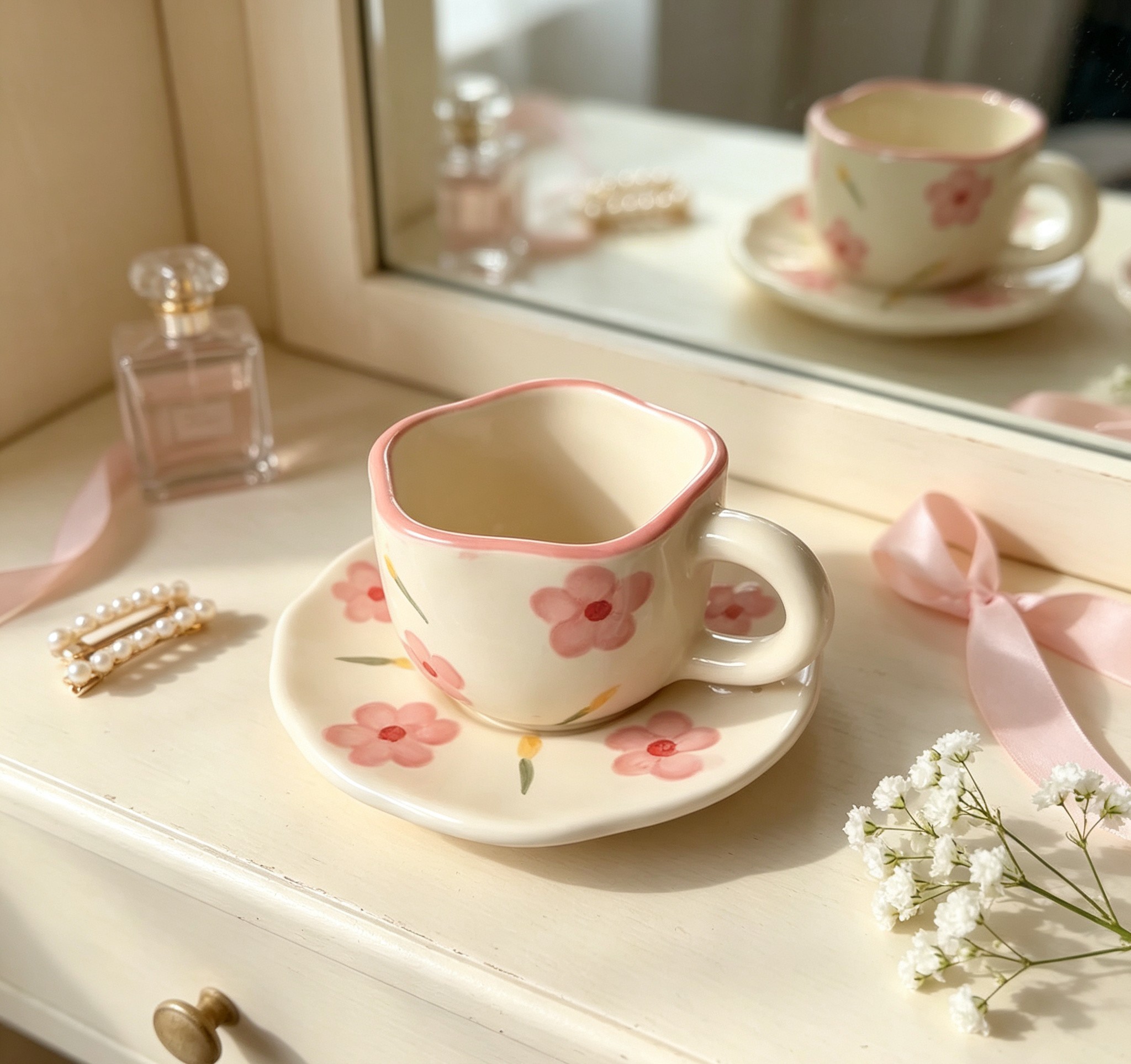
Empirical testing dictates that an optimized afternoon tea vessel should hold between 5 to 7 fluid ounces. The internal architecture purposefully features a wide brim and a shallow bowl. This calculated surface-area-to-volume ratio allows the uppermost layer of boiling liquid to cool rapidly to a safe drinking temperature. Simultaneously, this wide aperture maximizes the upward release of steam and complex aromatic compounds toward the olfactory sensors.
While users often interchange vessels out of convenience, their structural geometries serve entirely distinct thermal purposes. A standard Coffee Cup and Saucer utilizes a narrower, taller cylindrical profile. This specific engineering minimizes the exposed liquid surface area to lock in intense heat and preserve the delicate crema of espresso-based extractions. If inventory space is limited, specifying a hybrid-shaped vessel with moderate height and a gently fluted rim offers a pragmatic compromise for dual-use functionality.
Current market analysis reveals a definitive shift in consumer and commercial tabletop aesthetics. Buyers are rapidly moving away from stark, mass-produced uniformity toward tactile, engineered artistry. There is a surging demand for sustainable, high-temperature fired ceramics that feature organic silhouettes. Specifically, undulating or wavy rim designs are trending heavily. These are not merely decorative choices. A meticulously crafted wavy rim alters fluid dynamics, directing the liquid precisely to different zones of the palate to enhance the tasting profile of specialty loose-leaf teas.
Consider the engineering behind a premium wavy rim design. A high-grade Ceramic Cup typically features a precise 200-milliliter volume to optimize heat dispersion. When fired at a rigorous 1,280 degrees Celsius, the vitrified clay achieves a water absorption rate strictly below 0.5 percent. Utilizing advanced underglaze techniques ensures that intricate floral pigments remain permanently sealed beneath the glass layer. This prevents fading from heavy commercial washing and ensures complete food-safe compliance.
The physical usability of any drinking vessel relies entirely on the structural engineering of its handle. Designs generally split into two categories: the pinch handle and the loop handle. A pinch handle forces the user to grip the ceramic firmly between the thumb and index finger, creating subtle muscular fatigue if the walls are thick. In contrast, a precision-engineered loop handle allows the index finger to pass through the void securely. This distributes the payload weight across the finger while keeping knuckles safely away from the scalding exterior wall.
Engineers evaluate a saucer by the exactness of its central indentation, known technically as the well. A premium saucer features a well diameter milled to perfectly match the outer diameter of the cup's unglazed foot ring. This interlocking tolerance holds the upper vessel firmly in place. It actively mitigates lateral sliding and prevents catastrophic spills during transport from the service station to the dining table.
Before authorizing a purchase, implement a strict visual and tactile inspection of the ceramic surface. A commercial-grade piece must exhibit a perfectly smooth, uniform glaze layer. Immediately reject inventory displaying manufacturing defects such as pinholes, glaze bubbling, or unglazed rough patches. These structural flaws compromise sanitation protocols and drastically reduce long-term mechanical integrity.
The physical center of gravity represents a critical metric of manufacturing quality. When lifted by the handle, the vessel must feel evenly balanced. If the base lacks sufficient clay or the upper walls are cast too thick, the unit becomes top-heavy when filled with fluid. Poor weight distribution increases the risk of tipping and generates unnecessary wrist torque during prolonged use.
The operational lifespan of your ceramics depends entirely on strict adherence to maintenance protocols. Any inventory featuring metallic accents like gold leaf or platinum banding must never enter a microwave. The metallic compounds will induce dangerous electrical arcing and cause permanent scorching to the glaze. Furthermore, the highly alkaline detergents and aggressive water jets of commercial dishwashers will rapidly abrade delicate overglaze details. For high-end teaware, manual washing with pH-neutral surfactants is mandatory.
Tea leaves contain high concentrations of natural tannins. Over thousands of uses, these compounds stubbornly bind to microscopic abrasions in the glaze, resulting in a brown discoloration. To safely strip these tannin stains without compromising the vitrified surface, apply a dense paste of sodium bicarbonate and warm water. Agitate the interior gently with a non-abrasive microfiber cloth. To prevent physical chipping during storage, insert soft felt dividers between saucers and avoid stacking cups vertically.
Specifying the correct vessel demands a calculated balance of aesthetic presentation and strict thermodynamic utility. The ideal match seamlessly supports your specific brewing parameters, optimizing heat retention and flavor delivery. By rigorously evaluating material density, volume ratios, and ergonomic tolerances, you secure a highly durable investment. Ready to upgrade your tabletop inventory with technically superior pieces? Explore the extensive collection of premium teaware at Art-Word. Whether you require a high-durability Tea Cup Set for commercial service or an elegant floral configuration for private dining, you will find the exact engineered match to elevate your daily tea ritual.
The primary distinction lies in their thermodynamic geometry. A traditional tea vessel features a wide brim and a relatively shallow bowl, maximizing the surface area of the liquid exposed to the atmosphere. This accelerates cooling to an optimal tasting temperature while dispersing complex aromas. Conversely, a coffee vessel utilizes a taller, narrower cylinder to restrict surface area, slowing heat loss and protecting the delicate crema of espresso extractions.
Yes, materials scientists classify fired ceramic as an exceptional thermal insulator. Ceramics possess a high specific heat capacity, allowing them to absorb and retain massive amounts of thermal energy. Dense materials like stoneware radiate heat back into the fluid. Meanwhile, high-fired porcelain restricts rapid heat transfer, offering a superior balance of lightweight elegance and sustained heat retention.
Absolutely. Fluid dynamics dictate that the angle and thickness of the rim change how liquid hits the tongue. A thin, flared rim directs the tea broadly across the front and sides of the palate, instantly highlighting the delicate, astringent notes of green or white teas. A thicker, straight rim funnels the liquid toward the back of the mouth, which tends to emphasize the heavier, robust body of black or fermented teas.
A correct match relies on precise physical tolerances. The unglazed foot ring at the base of the cup must fit exactly inside the indented well of the saucer. If the well is too wide, the cup will slide laterally during transport. If the well is too narrow, the cup will sit unevenly on the ridge, creating a severe tipping hazard. Always verify this interlocking fit before purchasing mixed inventory.
Configurations depend entirely on your service scale. A standard personal setup typically includes 2, 4, or 6 cups with matching saucers. A specialized set curated for two people often includes a compact shared teapot. A complete formal service inventory generally requires 6 to 8 cups and saucers, supported by a high-capacity teapot, a creamer jug, and a precision-lidded sugar bowl.
This depends on the specific firing technique and surface finish. Plain, high-temperature glazed ceramics are generally rated for commercial dishwashers. However, any unit featuring metallic rims or overglaze painted decals requires strict hand-washing. The abrasive chemical action of modern dishwasher detergents will systematically degrade metallic leafing and strip away delicate surface paints.


